
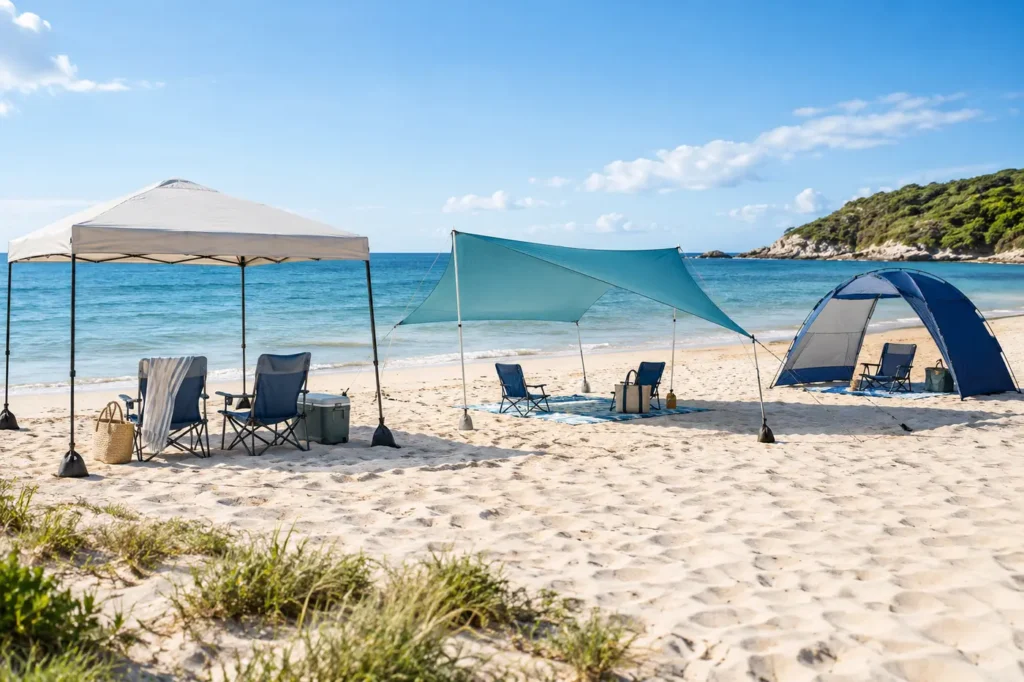
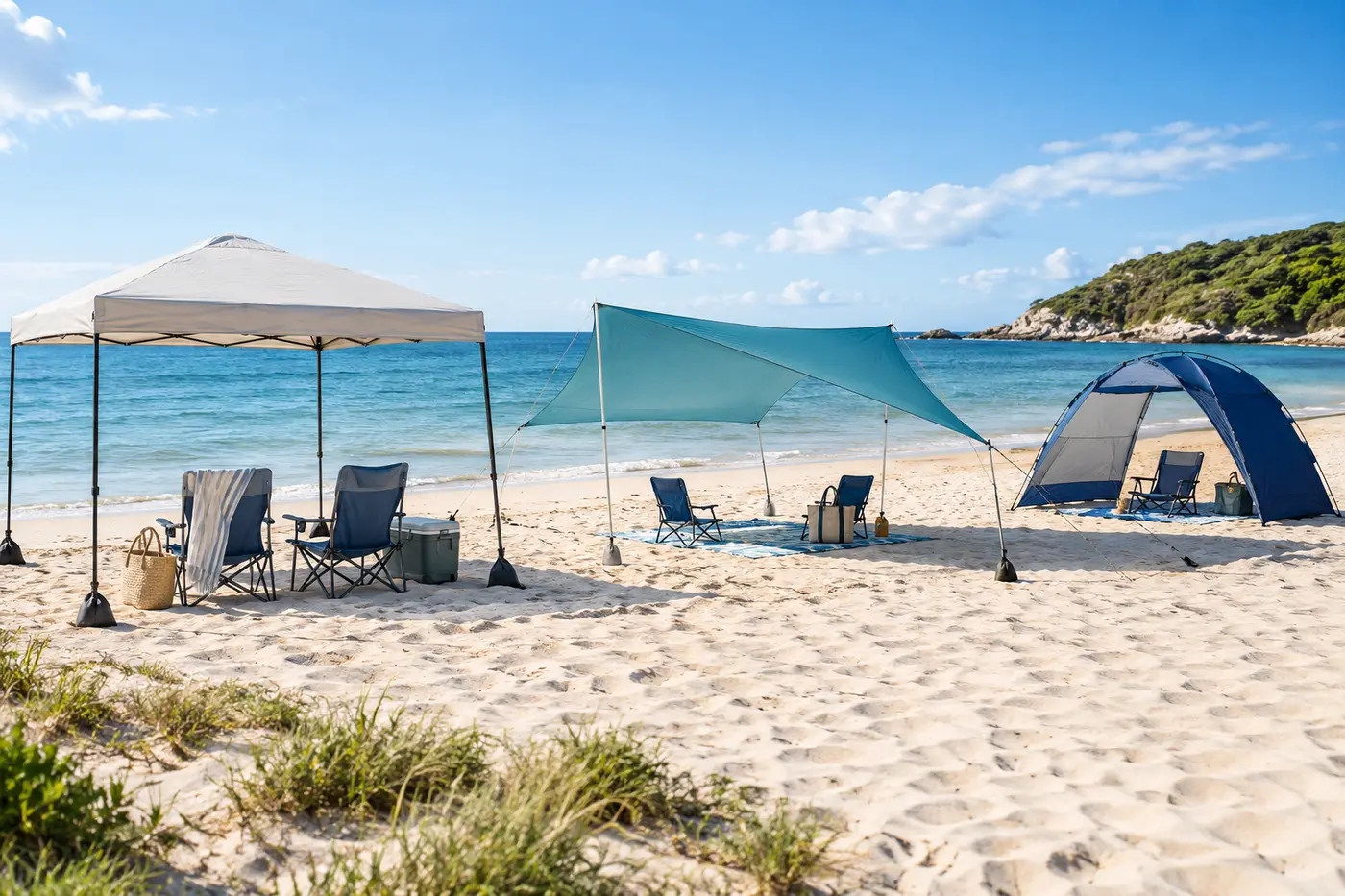
Quick verdict: Choose a screen house when keeping insects out of a seated area is the priority. Choose an open canopy when easy access and shade matter more. Neither label guarantees rain protection, wind resistance or permission to cook underneath it.
Research-based buying guide; no hands-on testing is claimed. As an Amazon Associate, Time to Get Outside earns from qualifying purchases.
| Decision | How the options compare |
|---|---|
| Main job | Screen house: Mesh-enclosed sitting or dining space Open pop-up canopy: An open shaded area |
| Entry | Screen house: Zippered or overlapping doors Open pop-up canopy: Open sides |
| Main compromise | Screen house: More door management and fabric Open pop-up canopy: No insect enclosure without suitable accessories |
| Rain check | Screen house: Read the exact roof’s rating Open pop-up canopy: Read the exact roof’s rating |
Identify the problem at your usual campsite
If mosquitoes interrupt every meal, a roof alone does not solve the problem. If you mainly need a shaded place to unload gear, repeatedly opening a mesh door may be unnecessary. Start with the task before comparing similar-looking shelter photographs.
Coleman’s Back Home screen-canopy description emphasizes enclosed mesh walls and access around a picnic table. That is an insect-management feature. It should not be interpreted as a promise that every screened shelter is waterproof or suitable in the same wind conditions.
When a screen house earns its place
A screen house is useful when you spend long periods seated and want a defined bug barrier. Check the door arrangement, the seal near the ground and the usable space around your own table and chairs. Roof dimensions can look generous while sloping walls reduce the working footprint.
Think about traffic. Children, pets and frequent trips to the kitchen box mean doors will open often. A shelter that is easy to enter and close may be more useful than a larger one whose zipper everyone leaves open. Mesh also does not create complete privacy.
When an open canopy is enough
An open canopy is convenient for a social area, gear staging or shade where insects are manageable. Open access lets chairs move in and out without a doorway. Check how the roof’s shadow falls during the hours you use it; the advertised footprint is not a full-day shade guarantee.
Side panels or mesh accessories may expand its usefulness, but verify compatibility and their effect on the permitted setup. Adding walls can change how the shelter catches wind. Do not treat a generic accessory kit as an automatic upgrade approved for every frame.
Rain and wind require exact specifications
Read the product page and manual for the exact model. Some shelters are primarily sun protection. Water-resistant fabric, seam treatment and a steep-looking roof do not by themselves establish a waterproof rain shelter.
Anchoring instructions matter for both designs. Include the required stakes or weights and allow space for guy lines. Follow wind limits and take-down guidance rather than using a reassuring catalogue claim as permission to leave an unattended shelter through deteriorating weather.
Setup, transport and cooking limits
Check whether the packed length fits your vehicle and whether one person can safely lift and assemble it. A quick mechanism does not necessarily mean a light shelter. Compare the complete carried package rather than the roof fabric alone.
Do not assume a screen house or canopy is a safe cooking enclosure. Follow both the shelter and appliance instructions for heat, flame and ventilation. For Canadian trips, keep an alternative plan for meals and shelter when wind, rain or local rules make the intended arrangement unsuitable.
Final buying recommendation
Buy screening for insects and an open canopy for accessible shade. If reliable rain shelter is the main need, choose a product explicitly designed for it. Skip an extra structure when an existing campsite shelter already does the job without another bulky setup.
Compare current U.S. and Canadian listings
These buttons open product searches, not guaranteed stock or fixed prices. Match the exact model, size, included accessories and seller before ordering. Canadian shoppers should compare the final cost in Canadian dollars, including any shipping or import charges.
Related buying guides
- Best Pop-Up Screen Houses for Bug-Free Camping
- Best Camping Tarps for Rain Protection and Shade
- Pop-Up Beach Shelter vs Beach Umbrella: Which Offers Better Shade?
Sources and research notes
Specifications and guidance checked October 15, 2026. Recommendations are editorial judgments based on the cited details and use cases; they are not independent performance measurements.