

Quick verdict: For most day hikes, start with a rigid reusable water bottle: it is easy to fill, stands upright and is straightforward to rinse. Carry a collapsible bottle when backpack space matters more than one-handed drinking convenience, or as a spare to hold extra water on longer outings. Both can work well, but their lids and closures matter as much as their shape.
Research-based buying guide, not a hands-on product test. As an Amazon Associate, Time to Get Outside earns from qualifying purchases through the affiliate shopping links below, at no additional cost to you.
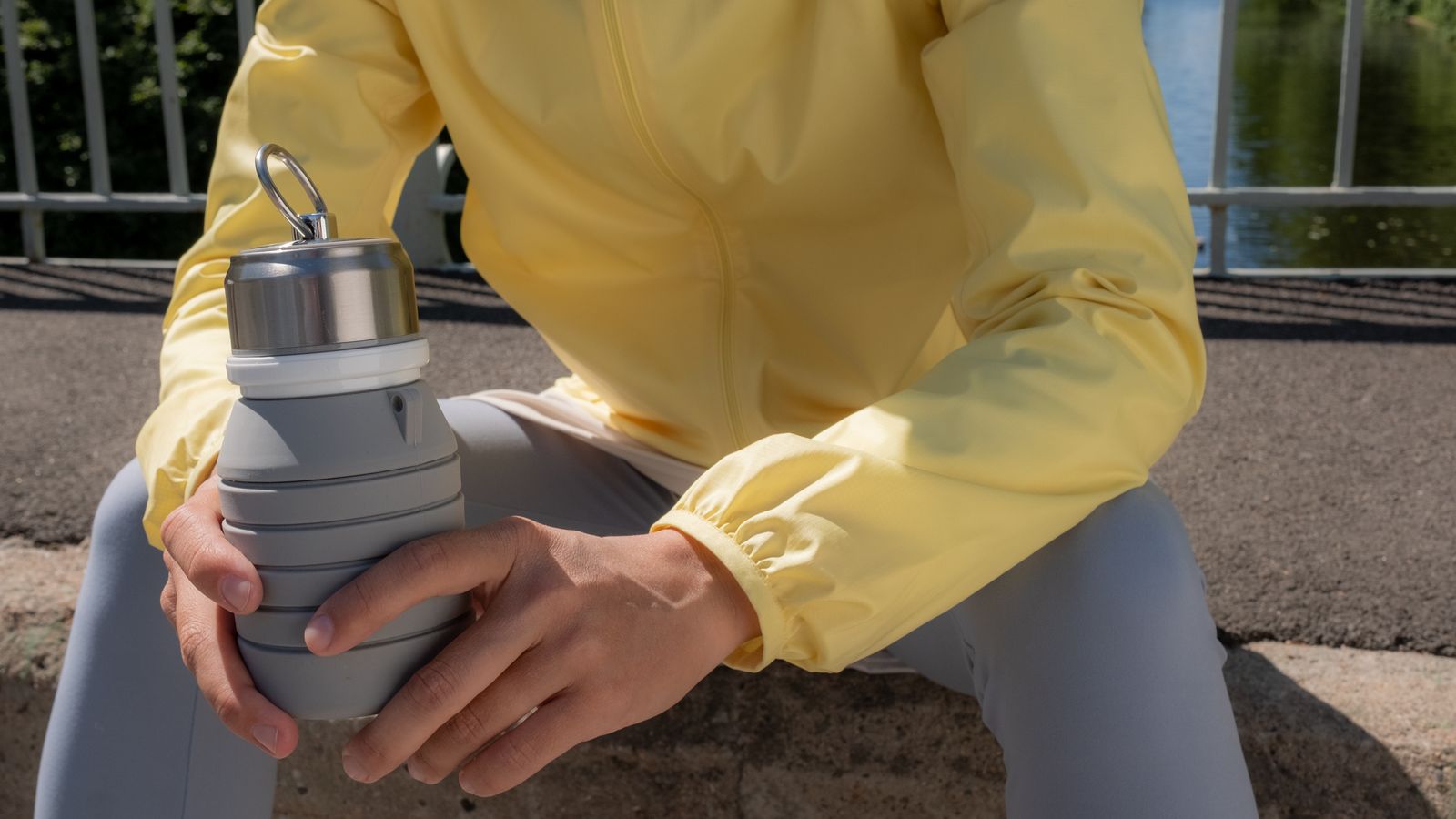
Featured photograph credit: Anastasia Shuraeva / Pexels. Illustrative hydration scene, not a test of the products compared.
Compare hiking bottle options:
Find rigid hiking bottles on Amazon USA
Find collapsible hiking bottles on Amazon USA
Find rigid hiking bottles on Amazon Canada
Find collapsible hiking bottles on Amazon Canada
Product-search links; compare capacity, cap design and cleaning instructions before ordering.
What makes a bottle useful on an actual walk?
A trail bottle earns its place when it is easy to reach, refill, carry and clean. A large capacity is not very helpful if the bottle slips out of the side pocket or the mouthpiece is so awkward that you stop drinking. On a hot route, you’ll also need enough water for the conditions and a reliable refill plan; neither construction type magically makes water safe to drink.
REI’s March 2026 water bottle guide emphasizes fit, capacity, cap design and cleaning. It highlights collapsible bottles as useful when storage space is tight, while simple rigid bottles remain versatile for daily life and outdoor activities. That is a more useful basis for a purchase than assuming the newest design must be better.
Collapsible vs rigid bottle at a glance
| Decision | Rigid bottle | Collapsible bottle |
|---|---|---|
| When empty | Takes the same space as when full | Folds or rolls to save space |
| Filling at a tap | Holds shape; usually easier to handle | Flexible walls need support |
| Drinking while walking | Firm grip, familiar bottle form | Can be less stable as it empties |
| Packing spare capacity | Bulkier backup | Excellent as an empty backup |
| Cleaning | Wide openings simplify scrubbing | Soft corners and seams may require care |
Why a rigid bottle is the safe default
A firm bottle is easy to set on a picnic table, slip into a side pocket and pass to a friend. You can often see inside it and reach the bottom with a bottle brush if it has a wide mouth. For walkers who use the same bottle at home, work and on trails, that familiarity is valuable.
A simple screw cap has relatively few moving parts, though it still needs to be closed correctly. Straws, flip tops and bite valves can offer more convenience but add nooks and crevices to clean. The exact bottle material matters too: uninsulated plastic and stainless steel have different weights and heat-management properties; insulated bottles are another comparison altogether.
The disadvantage is bulk. An empty one-litre rigid bottle still occupies the same space on the way home. If your daypack is already packed full, that can be a real inconvenience.
Where a soft bottle earns its place
Collapsible bottles are often more comfortable to carry as extra water capacity. Fold or roll them when empty, then fill them when a route has a long stretch between reliable water sources. This can be useful for backpackers or travelers trying to make room for a jacket, food or camera gear.
But don’t assume every soft bottle is equally tough. Its flexible body, welding seams and cap threads all deserve inspection. A rigid bottle may withstand repeated rubbing against a rough pack pocket differently from a thin flexible pouch. Keep a soft bottle away from sharp tools, and use a pocket that doesn’t crush the cap or bend it against a buckle.
Soft bottles are also not necessarily easier to drink from. As the water level drops, a bottle may flop around unless it has a shaped base or a suitable vest pocket. Some have squeeze or bite-style lids; choose what feels comfortable on the actual route rather than what looks clever in a photograph.
How much water capacity do you actually need?
Water itself weighs about one kilogram per litre regardless of the container. The capacity decision should account for temperature, exertion, duration and whether a safe refill is available. REI’s hydration-pack guide makes the same point: water weight is significant, and extra capacity is helpful only when it meets your route’s needs.
Choose a capacity that fits your pack and expected drinking opportunities; a soft spare may be a good way to add reserves without committing to another permanent bottle. Do not rely on a natural stream or lake as ‘refill access’ without a suitable water-treatment plan. Neither a rigid nor a collapsible bottle is a filter unless a verified treatment system is built into that exact product.
Leak resistance: the cap matters more than the shell
Look at the lid assembly. A well-fitted screw cap with an intact gasket may be more reliable than a complex flip-top closure with several seals. Some soft pouches come with sport spouts that can be bumped open inside a bag. Check the manufacturer’s closure instructions and the claimed leakage resistance for the specific model.
Before your first outing, fill any new bottle with clean water, seal it and leave it on its side over a sink or towel briefly to check for obvious leaks. That’s a useful household check, not a certification that the container is guaranteed waterproof under all pack pressures.
Washing and drying
Every bottle needs cleaning, particularly after flavored drinks. Open and wash lids, remove cleaning-safe seals as directed, rinse thoroughly and let everything dry before storage. Soft bottles can be awkward to hold open; a dedicated drying method or a fully opening base can make a difference. If you cannot clean and dry the construction, avoid using it for sugary drinks.
Do not assume a pouch is safe for hot water, freezing, dishwashers or boiling merely because some other flexible bottle is. Follow the exact manufacturer’s temperature and maintenance limits. A product intended for cold drinking water is not automatically a hot-water bottle.
Who should buy—and who should skip?
Choose rigid for everyday walking, frequent refills, easy cleaning and simple one-handed use. It is my first choice for most short day hikes.
Choose collapsible for spare hydration, tight backpacks, travel or routes with long distances between safe water sources. It’s a specialty convenience rather than a necessary replacement.
Skip both new purchases if your current food-safe bottle is clean, leak-free and sufficient. Money spent on an extra drinking container will not improve a walk that already has enough water.
Value verdict
Rigid wins for everyday convenience; collapsible wins for pack space. If you buy only one, choose a reliable rigid bottle with a simple cap and a size that fits your pack. Add a soft spare when you have a real need for extra capacity that packs away after use.
Shop US and Canadian options
These are Amazon affiliate searches, not fixed-price or availability claims. Compare capacity, food-safe material, cap type, cleanability, weight and the exact product’s care instructions.
More hydration guides
- Hydration reservoir versus water bottles for a daypack
- Insulated versus regular water bottle for winter walks
Sources and research notes
Recommendations draw on published outdoor hydration guidance and known construction differences, checked November 9, 2026. No personal leak testing or material endurance results are claimed.