
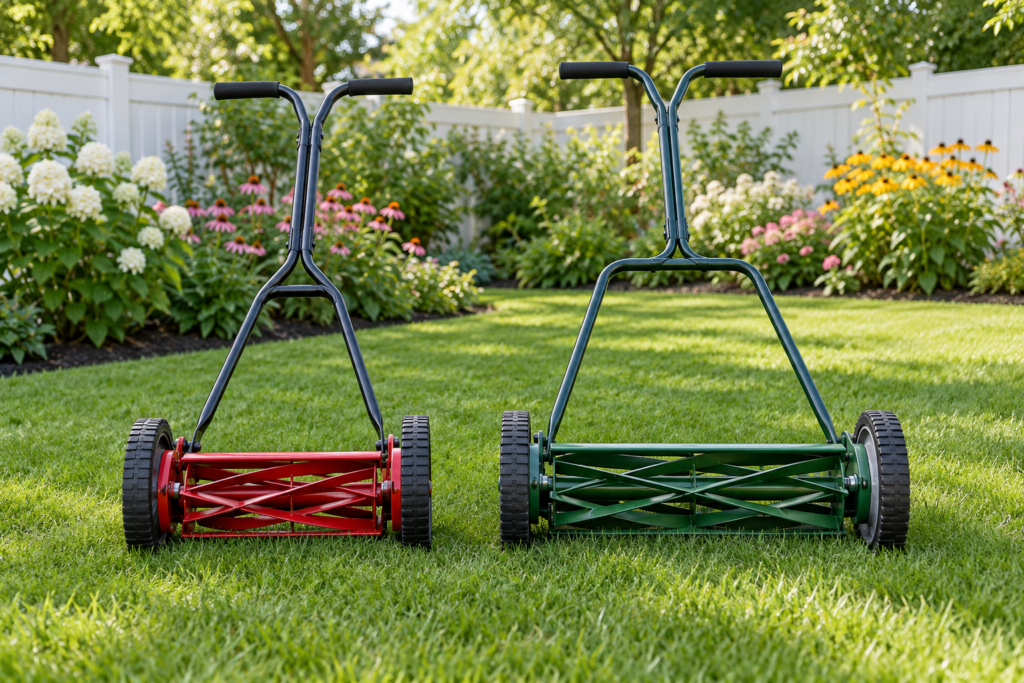
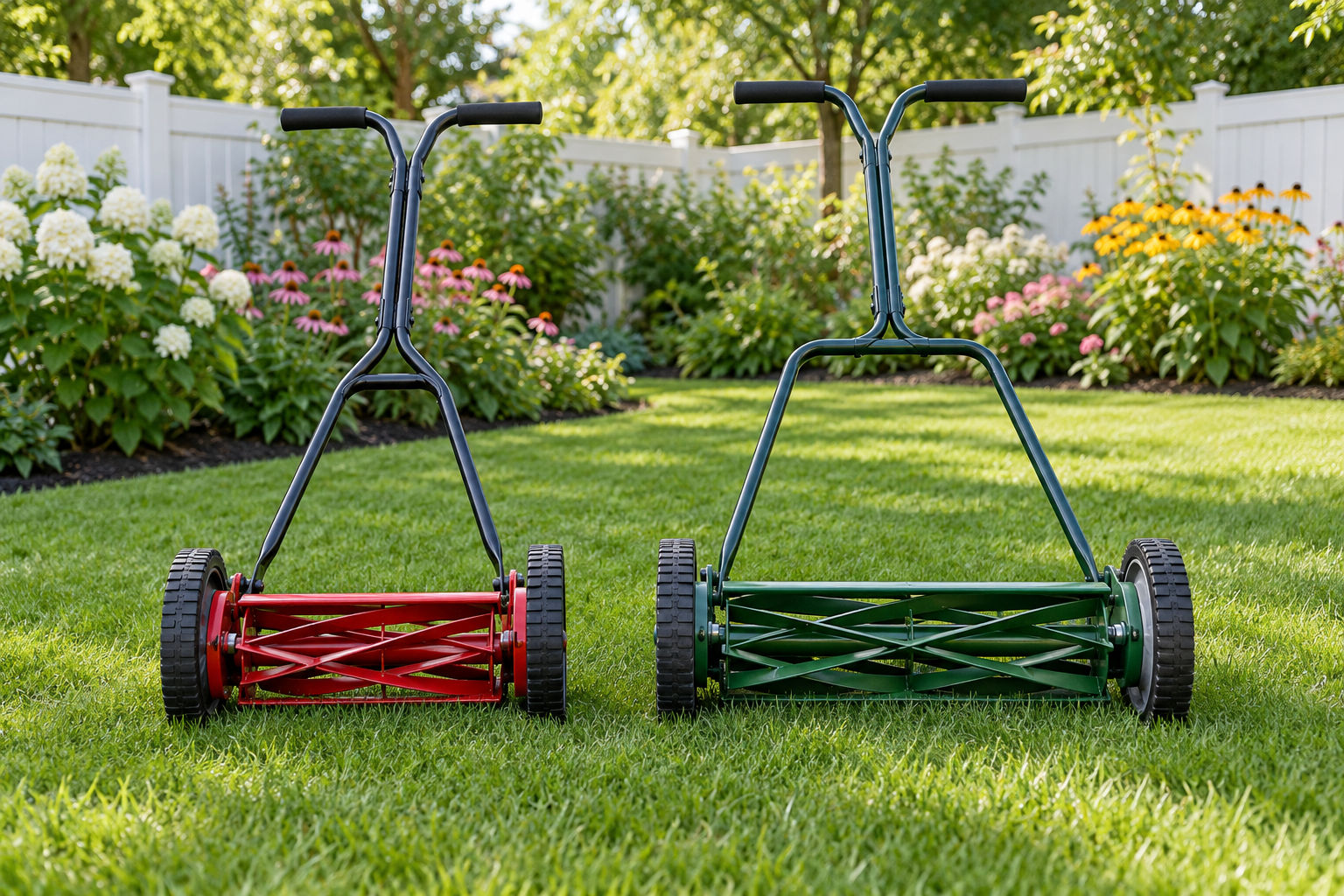
Quick verdict: Start with a suitable 14-inch mower when access, storage and a small lawn favour a compact tool. Consider 20 inches when longer open runs make the wider cut useful. Check cutting height and handling before assuming the wider mower is an upgrade.
Research-based buying guide; no hands-on testing is claimed. As an Amazon Associate, Time to Get Outside earns from qualifying purchases.
| Decision | How the options compare |
|---|---|
| Compared model | 14-inch example: American Lawn Mower 1204-14 20-inch example: Scotts 2000-20S |
| Listed cutting width | 14-inch example: 14 inches 20-inch example: 20 inches |
| Main buying question | 14-inch example: Access, compact storage and small patches 20-inch example: Useful width across open mowing runs |
Measure the route and storage before buying width
A wider reel mower can cover more ground on a straight pass, but a small yard is often defined by corners, gates and separate grass patches rather than open area alone. Measure access to the lawn and the place where the mower will be stored, allowing for the whole tool rather than cutting width alone.
The 14-inch American Lawn Mower 1204-14 and 20-inch Scotts 2000-20S provide concrete examples of the decision. They are not identical machines with six inches added to one blade. Compare their individual wheel layout, handle, cut-height adjustment and complete dimensions before attributing every difference to width.
When the compact mower is enough
A narrower mower deserves the shortlist when the lawn is small, storage is tight and access is awkward. The advantage is buying a format that fits the routine, not a guarantee that every compact mower is easier for every person to push. Grass conditions and the particular cutting setup also affect the work.
A wider cut may save little if most of the job involves repositioning between small areas. Before paying more, think through the passes you would actually make. A suitable compact model can be better value when it avoids buying and storing a larger machine for a width advantage that the yard rarely uses.
When a 20-inch cut earns its place
The Scotts example lists a 20-inch cut and a 1-to-3-inch height range. Its additional width is more relevant on longer, open runs where each pass can use the full cutting area. That does not mean the widest available mower is automatically suitable for your grass or maintenance schedule.
Check the required grass height against the exact mower’s current guidance. The 1204-14 listing contains differing maximum cut-height figures within its description, so confirm the current specification with the supplier if that limit decides your purchase. Do not buy on the assumption that both examples share the same adjustment range.
Price the maintenance routine, not only the mower
Read the model’s setup and maintenance instructions and check the availability of appropriate parts. A manual reel mower still needs suitable adjustment and care; the absence of a battery or engine does not make it maintenance free. An unsuitable mowing routine can overwhelm the attraction of a low purchase price.
My recommendation is a suitable 14-inch format for genuinely small, constrained spaces and a suitable 20-inch model when open runs make the wider cut useful. Compare Canadian-dollar totals for the correct models, included accessories and delivery. Keep a sound existing mower if it already handles the lawn comfortably; paying for unused width is not an improvement.
Compare current U.S. and Canadian listings
These buttons open product searches, not guaranteed stock or fixed prices. Match the exact model, size, included accessories and seller before ordering. Canadian shoppers should compare the final cost in Canadian dollars, including any shipping or import charges.
Related buying guides
- Push Reel vs Battery Lawn Mower: Which Is Better Value for a Small Yard?
- Wire-Free vs Boundary-Wire Robot Mower: Is Virtual Mapping Worth the Premium?
- Wheelbarrow vs Four-Wheel Garden Cart: Which Makes Yard Hauling Easier?
Sources and research notes
Specifications and guidance checked October 16, 2026. Recommendations are editorial judgments based on the cited details and use cases; they are not independent performance measurements.