
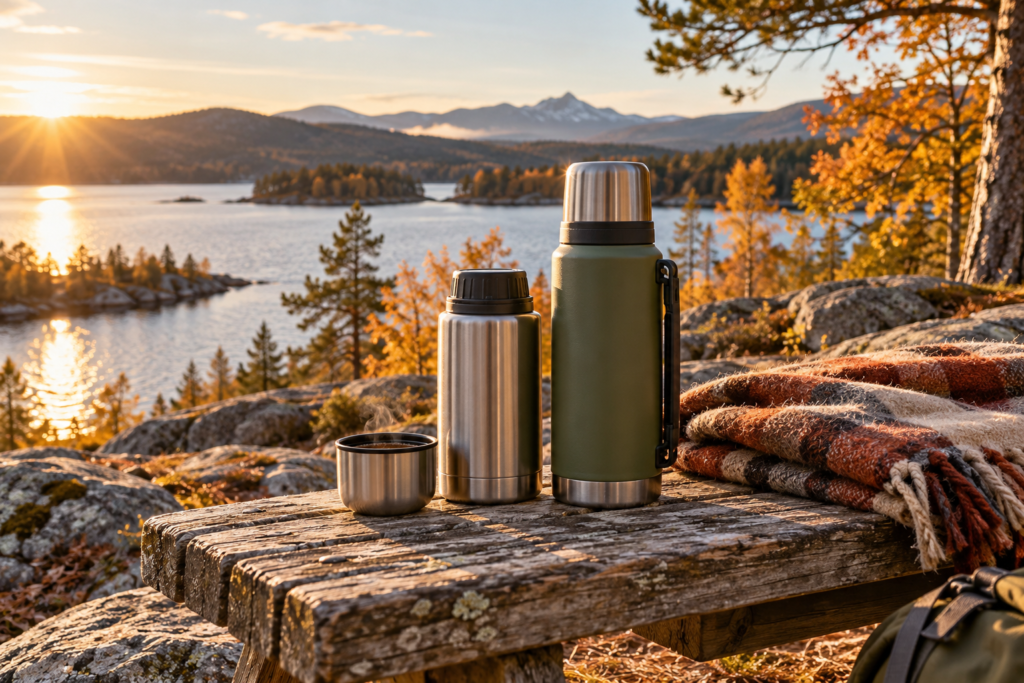
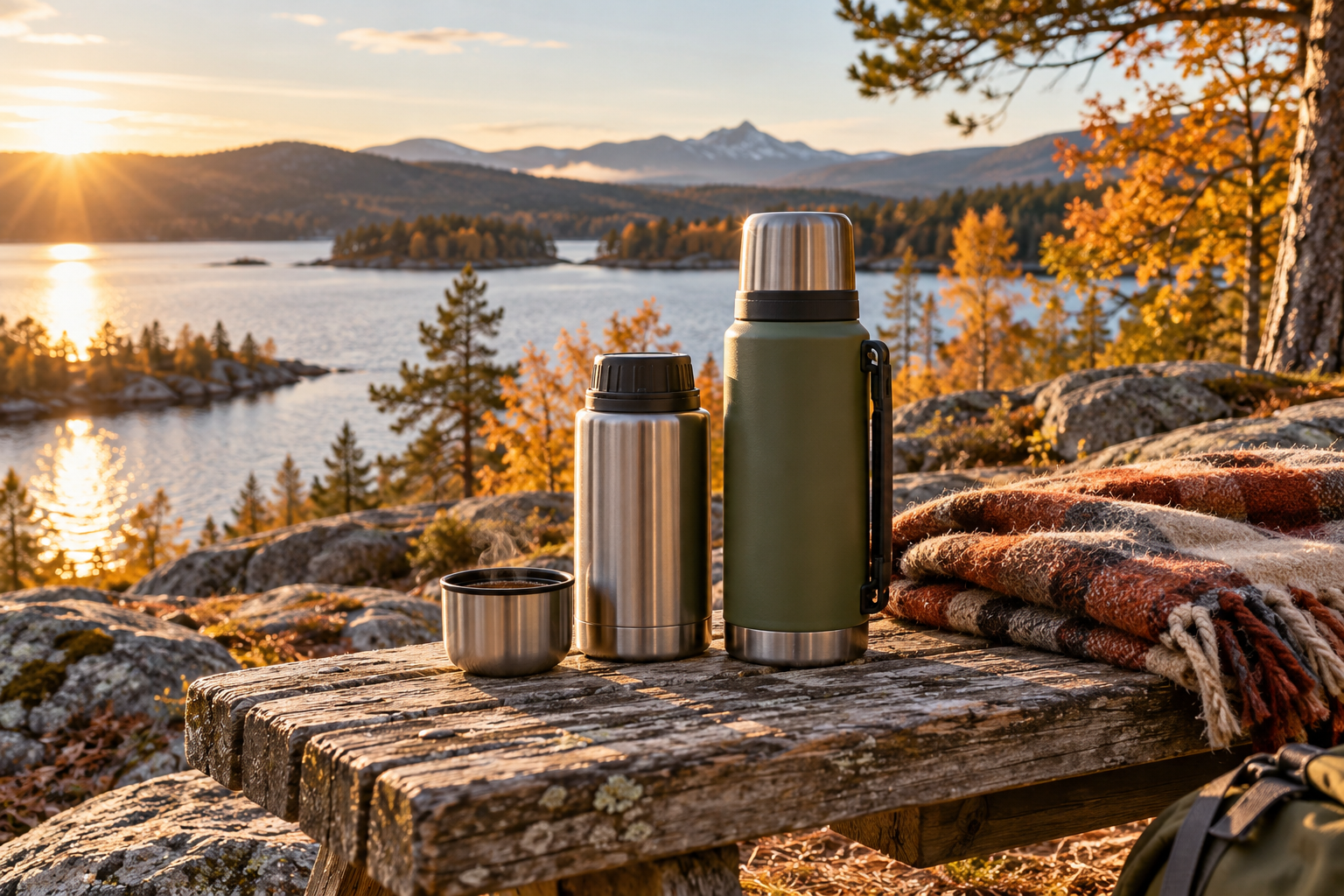
Quick verdict: Choose 1 QT for personal coffee breaks and a smaller carry. Choose 1.5 QT when you regularly share drinks or need the extra volume. The larger size brings 50% more nominal capacity, but also more empty weight and more drink weight when filled.
Research-based buying guide. No hands-on testing is claimed. As an Amazon Associate, Time to Get Outside earns from qualifying purchases.
| Decision | Classic Legendary 1 QT | Classic Legendary 1.5 QT |
|---|---|---|
| Nominal capacity | 1 U.S. quart, about 946 mL | 1.5 U.S. quarts, about 1.42 L |
| Listed empty weight | 1.4 lb | 2 lb |
| Listed height | 12.13 inches | 14.1 inches |
| Useful buyer | Individual drink supply | Sharing or a longer drink supply |
Use your actual cup to decide capacity
Nominal capacity is easier to understand when translated into the mug you use. With a hypothetical 250-millilitre serving, 946 millilitres is a little under four full servings and 1.42 litres a little under six. Real usable servings depend on your fill level and how much you pour.
Measure your usual cup and think through the outing. If you bring one drink for yourself and return home soon, the larger bottle may be mostly empty or encourage carrying more than you wanted. If two people regularly share a flask through a long outdoor event, running out early can make the extra capacity genuinely useful.
Count the weight of the liquid too
Stanley’s compared listings give empty weights of 1.4 pounds for 1 QT and 2 pounds for 1.5 QT. The larger bottle adds roughly 0.6 pounds before you fill it. Capacity also adds weight: half an extra U.S. quart of a water-like drink is approximately another 0.47 kilograms.
That is why I would not choose the largest flask purely because the price difference looks small. For a car trip, the loaded weight may be an easy trade. For a long walk, the full bottle has to earn its place alongside water and the rest of your gear. Compare the filled experience, not the empty product photograph.
Check height, access and pouring
The current 1 QT listing is 12.13 inches tall, compared with 14.1 inches for the listed 1.5 QT version. Measure your bag’s usable height rather than its advertised overall height. Consider the space needed to lift the bottle out when the bag is already full.
Stanley describes a twist-and-pour stopper and a lid that doubles as a cup on these bottles; the larger listing also describes a collapsible carry handle. Those conveniences are only useful if they suit your grip and routine. Try pouring from the size you intend to carry, especially if you tend to use the flask while standing at outdoor events.
Do not buy extra volume only for a headline retention claim
A manufacturer heat-retention claim is not the same as a side-by-side test of your half-filled bottle on a windy day. Starting temperature, fill level, opening frequency and conditions change the result. This guide does not establish an independent hot-drink winner.
If your smaller flask already keeps your drink enjoyable for the length of your outings, more nominal capacity is not an insulation upgrade you automatically need. Spend for an extra usable serving or a more convenient routine, rather than replacing a sound bottle because another size looks more substantial.
Who should buy—and who should skip?
Choose Classic Legendary 1 QT: You mainly carry drinks for yourself, value a shorter bottle and seldom empty a full larger flask.
Choose Classic Legendary 1.5 QT: You regularly share, need the additional servings and have a comfortable way to carry the loaded bottle.
Skip the purchase: A working bottle already covers your drink supply and fits your bag. There is no need to replace it to match a different capacity label.
Final buying recommendation
I would buy 1 QT for most individual outdoor coffee breaks and 1.5 QT for a clear sharing need. The larger bottle can be good value when you use its volume; the smaller bottle wins when it is the one you are willing to carry.
Compare U.S. and Canadian listings
These buttons open product searches. Match the exact model, size, generation, seller and included accessories; they do not guarantee stock or a fixed price. Canadian shoppers should compare the final total in Canadian dollars, including shipping and any import charges.
Related outdoor buying guides
Sources and research notes
Product details checked October 16, 2026. Specifications and limits below come from the manufacturers; buying recommendations are editorial judgments, not independent performance measurements.