
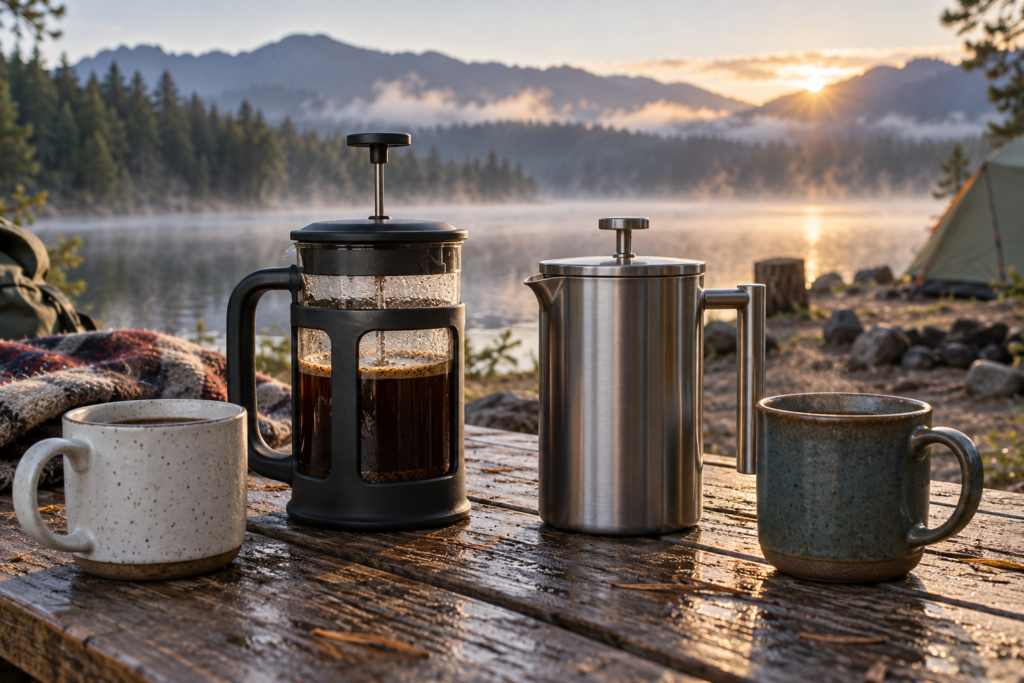
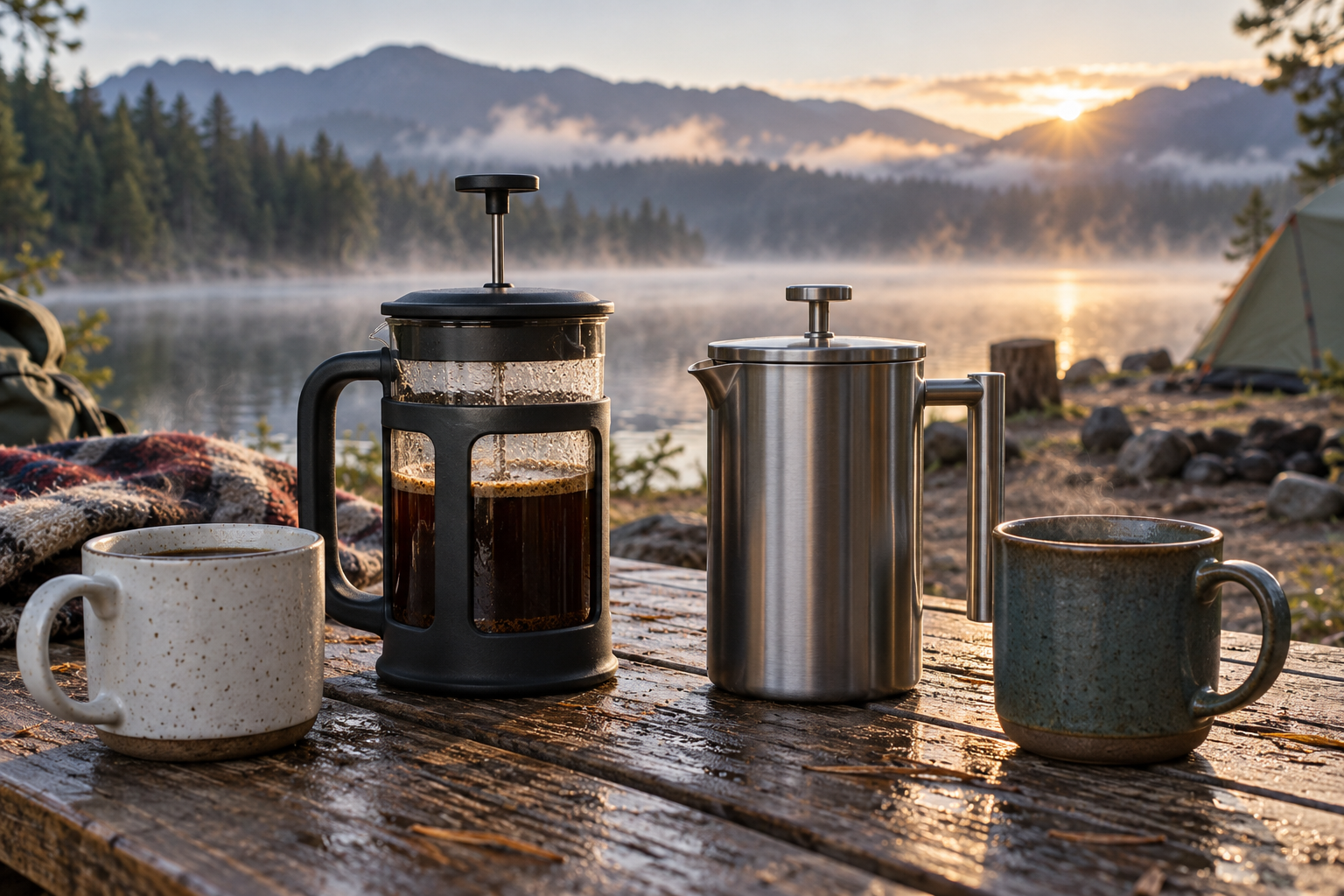
Quick verdict: Choose the 30-ounce GSI JavaPress when a smaller sleeved press suits your campsite kit. Choose Stanley’s 48-ounce Classic Stay Hot French Press when a larger batch and vacuum-insulated body justify the extra bulk. Neither replaces a suitable way to heat water.
Research-based buying guide; no hands-on testing is claimed. As an Amazon Associate, Time to Get Outside earns from qualifying purchases.
| Decision | How the options compare |
|---|---|
| Compared capacity | GSI JavaPress: 30 US fl oz Stanley Classic Stay Hot French Press: 48 US fl oz / about 1.4 L |
| Construction emphasis | GSI JavaPress: Copolyester carafe with insulating sleeve Stanley Classic Stay Hot French Press: Double-wall vacuum-insulated stainless steel |
| Best starting point | GSI JavaPress: A smaller campsite batch Stanley Classic Stay Hot French Press: Shared coffee and a larger serving vessel |
Decide how much coffee the group drinks
The 30-ounce JavaPress and 48-ounce Stanley Classic are not identical-size products. Their listed capacities use US fluid ounces, so check the actual serving sizes of your camping mugs. A large cup at breakfast can use more of the batch than a manufacturer’s general promise to serve several people suggests.
Choose the batch size around your normal group rather than occasional visitors. For one person, an oversized press can take unnecessary packing space. For several regular coffee drinkers, a smaller press can mean repeating the entire preparation while someone waits. This is a useful decision before comparing materials or a sale price.
What the JavaPress offers
GSI lists a copolyester carafe with a nylon insulating sleeve, an insulated lid and a plunger with a silicone ring. The appeal is a camping-oriented press without a large stainless steel vessel. The sleeve is an insulation feature, but it should not be treated as equivalent to vacuum insulation or a measured heat-retention promise.
The manufacturer specifies coarse-ground coffee and states that JavaPress is not for stovetop or microwave use. You still need a suitable separate way to heat the water. Check the care instructions as well: GSI describes hand cleaning and avoiding abrasive cleaners for the reviewed version.
When the Stanley body earns its bulk
Stanley lists a 48-ounce Classic French press with 18/8 stainless steel and double-wall vacuum insulation. It is the more relevant shortlist item when a larger serving vessel and an insulated body solve regular campsite needs. It is a different design from Stanley’s boil-and-brew product, despite similar brand searches.
Do not infer that a vacuum-insulated French press is a cooking pot. Compare the exact product name and instructions, not a general Stanley press photograph. Insulation is also not a guarantee of ideal coffee flavour after a long wait; decide whether you normally serve promptly or truly need the larger insulated container.
Compare ownership rather than the sale headline
Check the dimensions of the complete press, ease of packing the handle and plunger, and access for cleaning. A press with more capacity needs room both in the camp box and at the washing station. Match replacement components to the model instead of assuming all same-brand filters or plungers fit.
My recommendation is JavaPress for a suitable smaller batch and Stanley Classic for regularly shared coffee where its larger insulated body is useful. Keep your current brewer when it already serves the group comfortably. Compare current Canadian-dollar totals and the selected colour or package; a sale shown for one sold-out variant does not establish the price or availability of every version.
Compare current U.S. and Canadian listings
These buttons open product searches, not guaranteed stock or fixed prices. Match the exact model, size, included accessories and seller before ordering. Canadian shoppers should compare the final cost in Canadian dollars, including any shipping or import charges.
Related buying guides
- Best Camping Coffee Makers for Better Mornings Outdoors
- Pour-Over vs French Press for Camping: Which Coffee Setup Is Easier to Own?
- Hand Coffee Grinder vs Pre-Ground Coffee for Camping
Sources and research notes
Specifications and guidance checked October 16, 2026. Recommendations are editorial judgments based on the cited details and use cases; they are not independent performance measurements.