
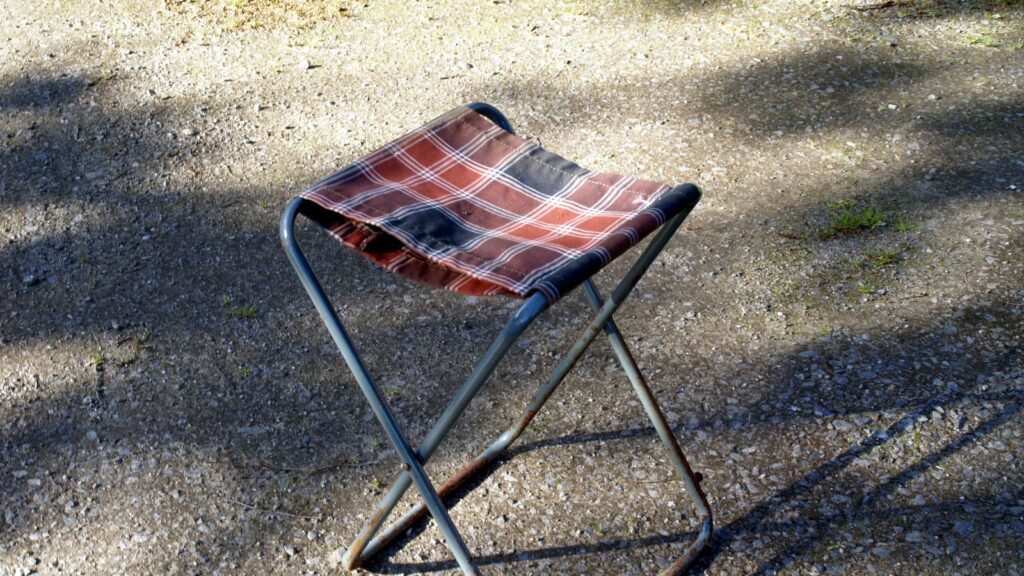
Quick verdict: Choose a compact foam sit pad for normal day hikes: it adds a dry-ish barrier on a rock or log, weighs little and has no legs to wobble. Choose a folding stool when you need to sit higher than the ground or want a reliable seat where there are no suitable rocks or benches. A stool is a comfort upgrade, not an essential item for every walk.
Research-based buying guide, not an independent product test. As an Amazon Associate, Time to Get Outside earns from qualifying purchases. Product-search links may earn a commission at no extra cost to you.
Featured photograph: Santeri Viinamäki / Wikimedia Commons, CC BY-SA 4.0. Actual portable folding camping stool; cropped and resized to 16:9.
Compare seats for your hiking breaks:
Find folding hiking stools on Amazon USA
Find foam hiking sit pads on Amazon USA
Find folding hiking stools on Amazon Canada
Find foam hiking sit pads on Amazon Canada
Product-search links; check stool seat height, load rating and packed weight, or sit-pad dimensions.
What changes when you sit down?
A foam sit pad protects your trousers from gritty, damp or cold surfaces, but you are still sitting on the ground or an existing surface. It does not lift you up or provide a backrest. That trade-off is precisely why the little folded pad makes sense: it solves one irritation without bringing a piece of camp furniture along.
A folding stool creates its own raised seat. On a flat, firm patch of ground, that can be a much better arrangement for a long lunch, watching wildlife, or anyone who finds getting back up from ground level difficult. Yet the extra height requires a frame, legs, hinges or shock-corded supports. More components mean more to carry and more to check before sitting.
Folding stool versus foam pad at a glance
| Decision | Foam sit pad | Folding stool |
|---|---|---|
| Where you sit | Ground, log, rock or bench | On its own raised seat |
| Carry weight | Usually tens of grams | Usually several hundred grams or more |
| Setup | Unfold and sit | Open frame and check stability |
| Uneven ground | No legs, but surface can still be awkward | Legs can sink or tip; choose firm level ground |
| Best use | Short hiking breaks and minimal packs | Longer stops, fishing and viewpoint sitting |
Real product examples show the scale of the difference
The Exped Sit Pad Flex is listed by REI at 1.8 ounces (roughly 51 grams) and folds into a compact three-panel shape. It is meant to sit on the ground, a log or a bench. That is an example of how little weight a dedicated pad can add, not a claim that every foam pad has the same dimensions or insulation.
At the other end, the Helinox Speed Stool is listed at 15.5 ounces packed (436 grams), with a seat roughly 10.5 inches above the ground and a 220-pound capacity. The REI Trail Stool uses a higher 15.7-inch seat but weighs 1 pound 2 ounces and lists a 225-pound capacity. These are named examples with manufacturer or retailer specifications, not independently tested comfort rankings.
Those two stools illustrate an important lesson: higher does not necessarily mean lighter, and a folding chair is not the same category as a stool. Always check the exact design’s seat height, packed length, load limit and footprint. If mobility makes a higher seat essential, a low ultralight stool might still be too low.
When a foam pad earns its place
For a typical hour or two in a park, a foam pad is enough. It gives you a predictable surface to sit on after rain, makes cold stone a little less unpleasant and keeps a bit of grit off your clothing. Closed-cell foam also has no inflatable chamber to puncture. REI’s backpacking guidance highlights the reliability and low weight of this kind of material.
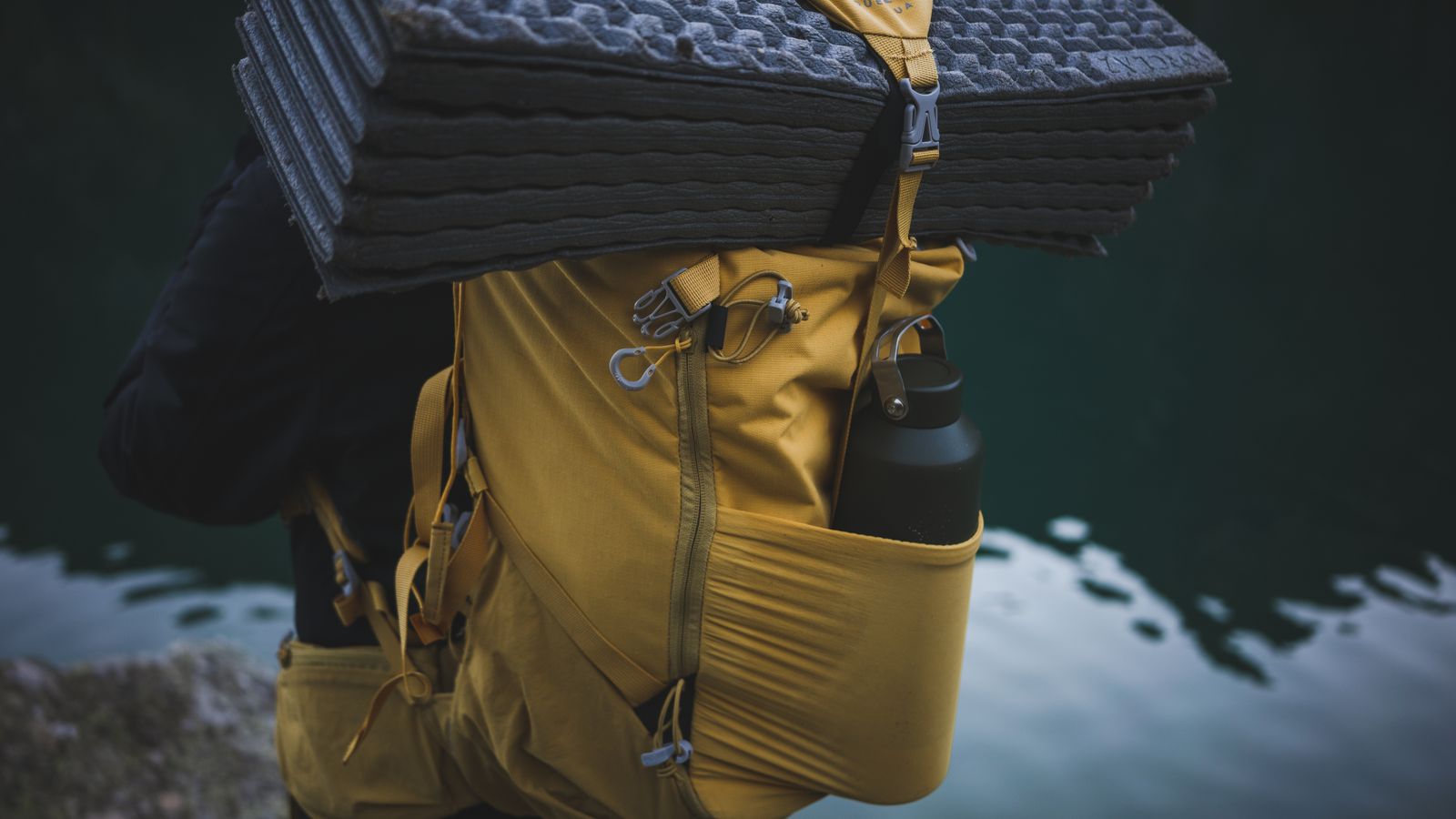
A pad is especially useful if you already bring a backpack: it can slip into an exterior sleeve or travel folded against the bag. Some hikers even cut or fold a larger old foam sleeping mat, but only do that with gear you own and don’t need intact for sleeping. A full-length sleeping pad is not necessary to solve a five-minute rest problem.
When a stool is worth the added weight
If you’re stopping to photograph birds, fishing from a shore or enjoying a picnic with friends, a ready-made seat can be the difference between a quick crouch and an enjoyable rest. The stool lets you sit even where benches are absent. It is also handy for local outings where the walk from the car is short and total pack weight matters less.
The strongest reason to pick a stool is ease of sitting and standing. However, not all stools are easy to rise from: the short models are notably lower than ordinary dining chairs. Test the height using a stable seat at home before buying. If you need armrests, back support or a genuinely high seat, a full camping chair may be more appropriate than either option.
Stability is not a minor detail
Three-legged stools are compact but less forgiving of shifting weight than broader four-leg chairs. REI notes that three-legged designs generally sacrifice some stability. Helinox’s own Speed Stool instructions advise using a flat, solid surface and distributing weight evenly. Keep legs away from soft mud, loose gravel, steep slopes and edges where you could topple.
Do not assume a folding stool has an unlimited load rating because it looks sturdy. Check the published capacity for the exact model, and choose a comfortable margin. The same applies to hinge condition and fabric wear. A stool whose feet sink into a sandy shoreline will not behave like it does on a hard shop floor.
Who should buy—and who should skip?
Buy the foam sit pad if you’re a day hiker, weight-conscious walker or casual nature watcher who just wants a barrier between clothes and rough ground.
Buy the folding stool if you frequently take long stops, want to stay off the ground and can carry its weight. Choose seat height and stability ahead of clever packing claims.
Skip both if your usual route has comfortable benches or you rarely stop long enough to need one. The best gear purchase is sometimes the one that stays in the shop.
Value: don’t confuse luxury with necessity
A simple foam pad is often the sensible first purchase because the problem it solves is straightforward. Do not pay a premium for exotic claims if a small, durable pad already fits in your pack. A stool costs more to build and brings more comfort in specific situations, but that value disappears if you leave it at home because it’s bulky or unstable on your routes.
Before shopping, sit down at your usual stopping point in your imagination: is there a clean log or bench, or is it open ground? How easy would it be to stand back up? Would you carry the extra half-kilogram for every outing? Those questions beat an online rating with no information about your trail.
Final winner
For short hiking breaks, the foam sit pad wins. It is simple, light and does its one job well. Pick a folding stool for the specific moments when a raised seat is worth its weight—especially longer rests or better access off the ground. Neither is a substitute for stable footing or a supportive chair if balance and mobility are concerns.
Compare shopping options in the USA and Canada
These buttons open affiliate product searches. Compare the exact dimensions, weight, construction, seat height and retailer before ordering. They are not live price or availability guarantees.
Related guides on Time to Get Outside
- Choosing a compact sitting pad for hiking or outdoor events
- Helinox Chair Zero versus Chair One (re): a larger comfort upgrade
Sources and research method
Research-based comparison using maker specifications and REI’s outdoor-gear guides, checked November 9, 2026. Neither seat is claimed to have been personally tested here.