
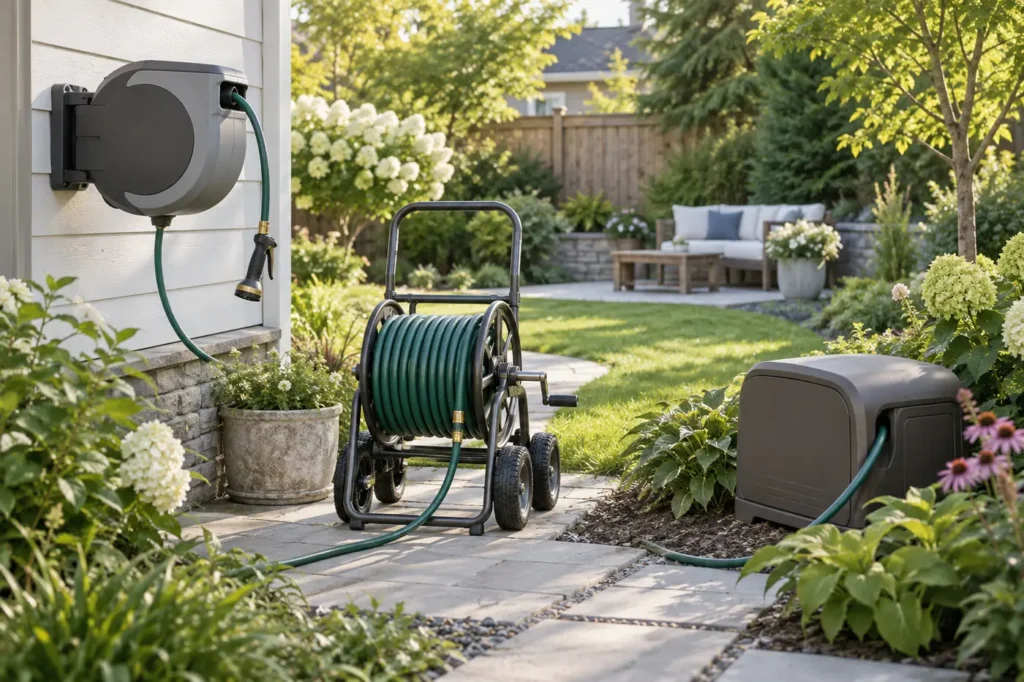
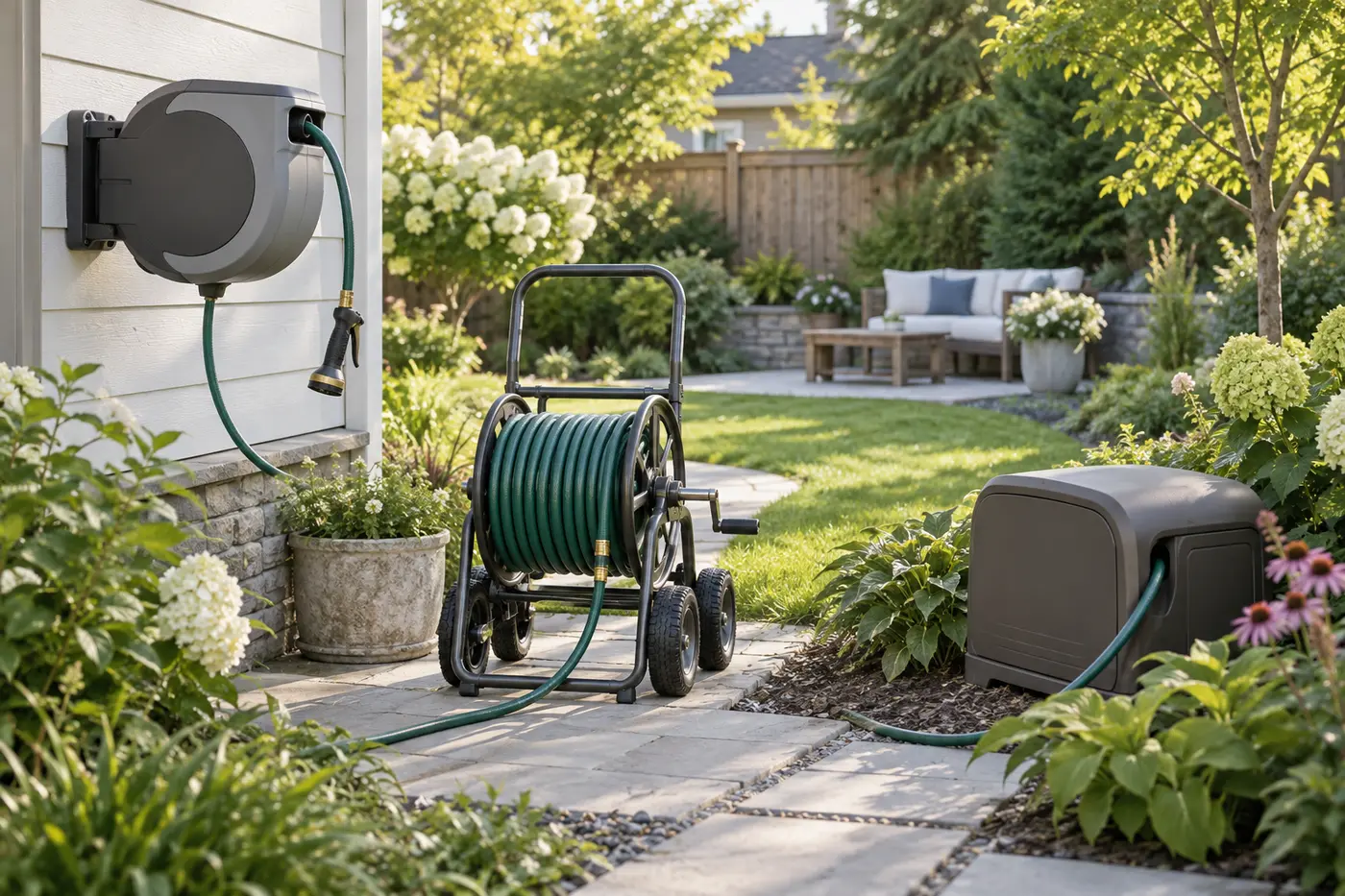
Quick verdict: Choose an expandable hose when carrying weight and compact storage are the main problem. Choose a rubber hose when a conventional fixed-length hose better suits frequent use and your storage space.
Research-based buying guide; no hands-on testing is claimed. As an Amazon Associate, Time to Get Outside earns from qualifying purchases.
| Decision | How the options compare |
|---|---|
| Storage | Expandable: Contracts after correct draining Rubber: Keeps its length and needs coiling or a suitable reel |
| Reach check | Expandable: Rated working length and required supply pressure Rubber: Listed hose length and route to the task |
| Compare carefully | Expandable: Working pressure, care and connector details Rubber: Actual material, weight and temperature limits |
Buy enough working reach, not just a big number
Measure the route from the tap to the furthest place you need water, allowing for corners and obstacles. Expandable hoses are commonly sold by their expanded working length, which depends on the design and suitable water supply. A conventional rubber hose keeps its physical length, although flow still depends on the overall setup.
Avoid ordering a much longer hose simply because the price difference looks small. Excess length adds handling and storage, and the supply, hose diameter and attached equipment all influence the result. A shorter hose that reaches comfortably can be more pleasant to use than a large coil dragged around a small patio.
When expandable is a useful upgrade
An expandable hose is appealing when the weight and bulk of your current hose discourage quick watering jobs. The format can be convenient for carrying out, using with a suitable nozzle and putting away. Check the instructions for expanding and draining the exact model rather than assuming every fabric-covered hose works this way.
Pocket Hose’s Silver Bullet guidance distinguishes working pressure from burst strength and describes draining before storage. A large burst-pressure claim is not permission to operate at that pressure, and the hose does not create extra pressure from the tap. Read the working limit and any equipment-compatibility requirements before choosing it for a particular task.
When rubber makes more sense
A suitable rubber hose deserves a place on the shortlist for someone who wants a conventional hose and has room to store it. Compare actual weight at the length you need, coupling construction and the manufacturer’s temperature and pressure ratings. Rubber is a material category, not a guarantee that every product has identical durability.
Check that a listing actually specifies rubber rather than relying on a dark colour or a heavy-duty label. Some hoses use other constructions and may still suit the job, but they are a different comparison. If you plan to use a reel, confirm the reel’s allowed hose length and diameter as well as its intended hose types.
Include storage and care in the price
The inexpensive hose can become less convenient if you must buy a new reel or cannot store it comfortably. Conversely, compact storage is only useful if you will follow the expandable model’s draining and protection instructions. Check cold-weather guidance for either type before winter; do not assume any garden hose can be left full of water through freezing conditions.
My buying preference is to keep a sound hose that already meets the job. Replace it with expandable when handling and storage are recurring complaints, or choose a suitable rubber model when that conventional arrangement fits better. Compare delivered Canadian-dollar prices, warranty terms and connector requirements, and do not pay extra for pressure figures that do not describe your actual use.
Compare current U.S. and Canadian listings
These buttons open product searches, not guaranteed stock or fixed prices. Match the exact model, size, included accessories and seller before ordering. Canadian shoppers should compare the final cost in Canadian dollars, including any shipping or import charges.
Related buying guides
- Best Hose Reels for Tidy Backyard Watering
- Retractable vs Manual Garden Hose Reel: Is Automatic Rewinding Worth It?
- Best Garden Kneelers and Seats for Comfortable Yard Work
Sources and research notes
Specifications and guidance checked October 15, 2026. Recommendations are editorial judgments based on the cited details and use cases; they are not independent performance measurements.