
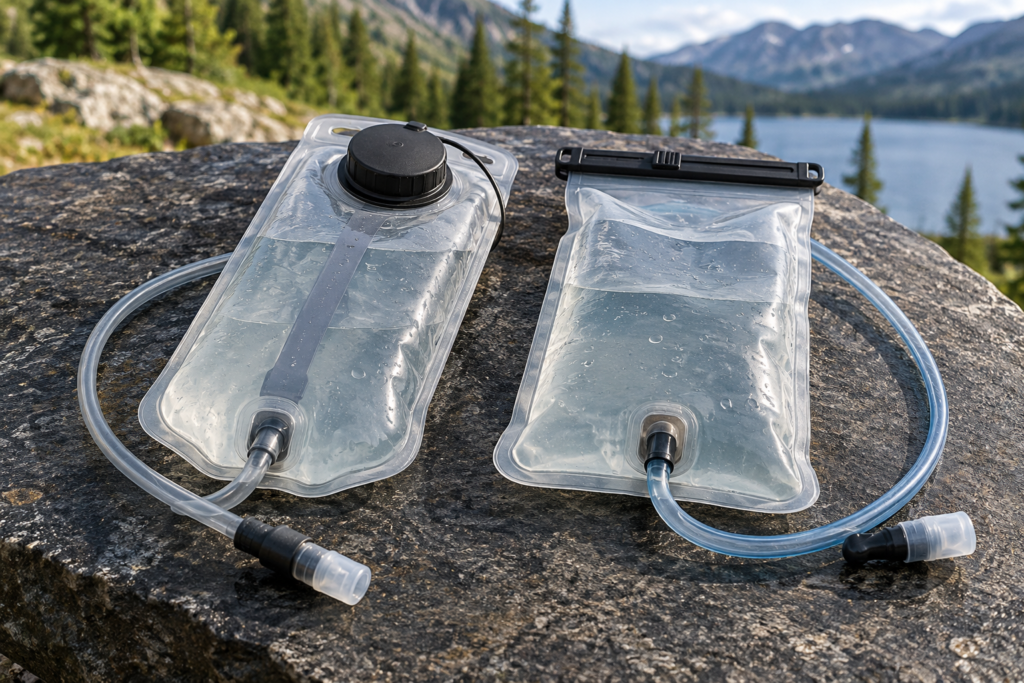
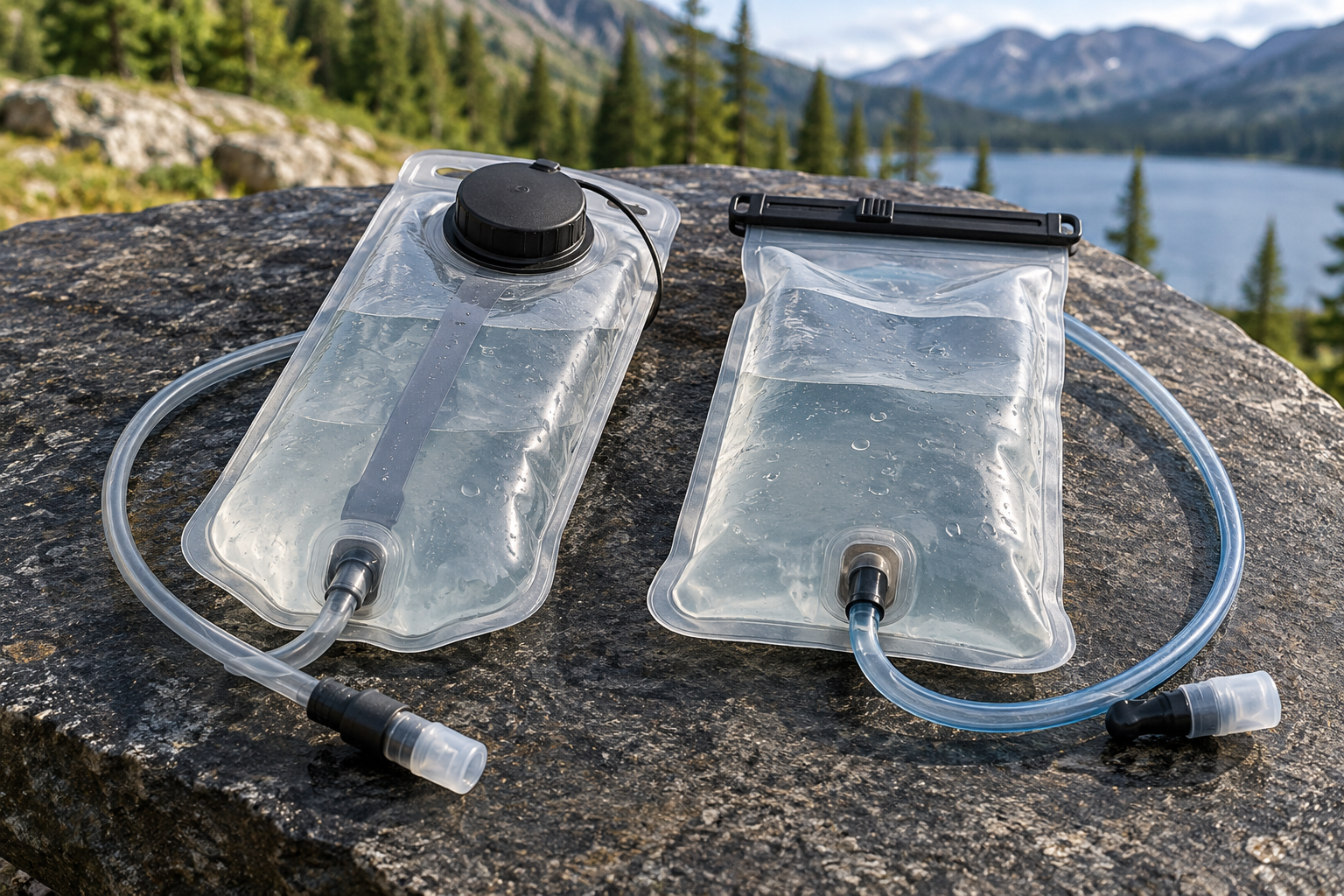
Quick verdict: Choose the reservoir that fits your pack and gives you the filling, valve and cleaning routine you prefer. Contour’s low-profile design is worth considering; a sound Crux that already works is not an automatic replacement candidate.
Research-based buying guide; no hands-on testing is claimed. As an Amazon Associate, Time to Get Outside earns from qualifying purchases.
| Decision | How the options compare |
|---|---|
| Manufacturer emphasis | Crux 2L: Refilling handle, cap and on/off drinking control Contour 2L: Low profile, shaped baffles and side tube exit |
| Listed empty weight | Crux 2L: 210g on the reviewed listing Contour 2L: 142g on the reviewed listing |
| Check before ordering | Crux 2L: Filled shape, hanger and current fittings Contour 2L: Filled shape, hanger and current fittings |
Fit matters more than the brand on the pack
Two litres describes the nominal water capacity, not the outside shape. A reservoir has to sit comfortably in the sleeve, hang from the available support and route its hose without awkward bending. Check those details before assuming the pack and reservoir must share a brand—or that any two-litre reservoir will fit.
CamelBak lists the reviewed Crux 2L at 210g, while HydraPak lists Contour 2L at 142g. That 68g difference is an empty-system specification comparison, not a measurement of comfort or reliability. Water dominates the filled load, so the lighter reservoir is only useful if its fit and operation also suit you.
When Crux is the sensible choice
Crux’s handle, fill cap and drinking-tube on/off control are practical features to examine. If you already know the routine and the reservoir works well in your bag, there may be little reason to replace it. A replacement hose or valve can be a better purchase than a complete new reservoir when the maker supports the repair.
Do not turn CamelBak’s flow marketing into an independent comparison against Contour. A percentage claim about a previous design does not prove superiority over a different current product. Compare how comfortably you can fill, close and drink from the exact system instead.
When Contour earns a place on the shortlist
Contour emphasizes a shaped bottom, internal baffles, side tube exit and a universal hanger. These are relevant when a rounded reservoir crowds your pack or moves awkwardly with the load. HydraPak’s current listing also describes hose-management and disconnect features; check the version supplied by your seller.
A universal hanger is a broad compatibility intention, not a guarantee for every bag. Compare the filled dimensions and attachment arrangement with your pack’s instructions. Also confirm replacement valve and tube availability in Canada, because a convenient system is less useful if ordinary service parts are difficult to obtain.
Compare maintenance and the whole purchase
Look at how you will reach the interior, clean the tube and dry all components. Follow the reservoir manufacturer’s care guidance and check whether any accessories are included. A low advertised price may be for a reservoir-only part rather than the complete hose-and-valve setup you expect.
My preference is to keep a working Crux or Contour that fits and is easy to maintain. Buy Contour for a specific profile or handling advantage, and Crux when its controls and fit suit you better. Compare delivered Canadian-dollar prices for complete systems and matching current generations; a small weight saving is not a good reason to accept an awkward fit.
Compare current U.S. and Canadian listings
These buttons open product searches, not guaranteed stock or fixed prices. Match the exact model, size, included accessories and seller before ordering. Canadian shoppers should compare the final cost in Canadian dollars, including any shipping or import charges.
Related buying guides
- Best Hydration Packs for Hiking and Long Outdoor Walks
- Hydration Reservoir vs Water Bottles for a Daypack
- Framed vs Frameless Hiking Backpack: Which Carries Better?
Sources and research notes
Specifications and guidance checked October 15, 2026. Recommendations are editorial judgments based on the cited details and use cases; they are not independent performance measurements.