
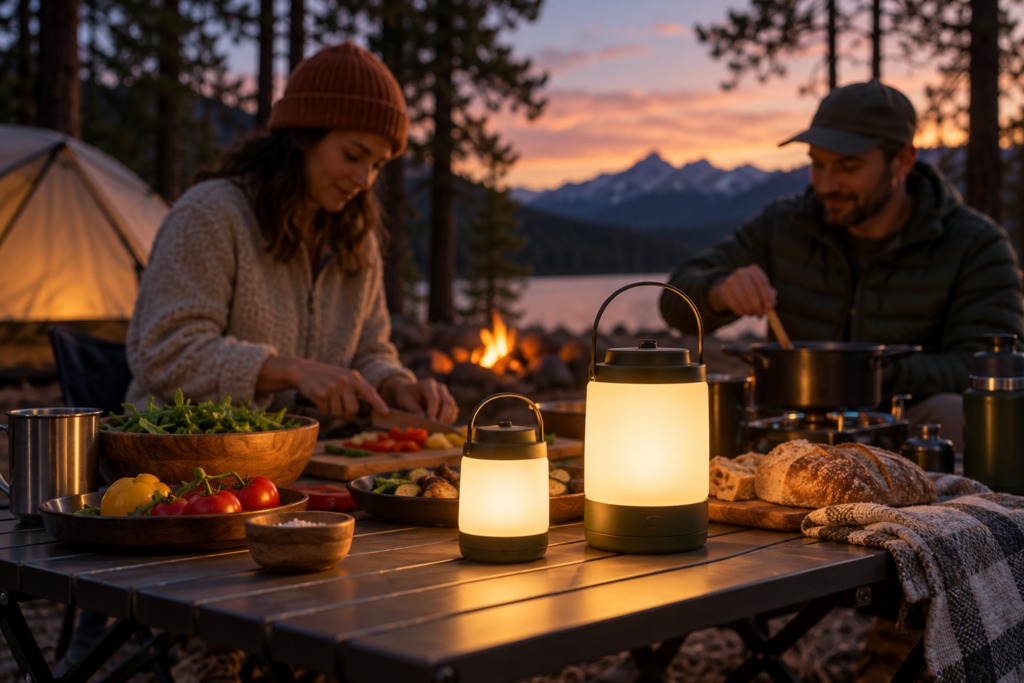
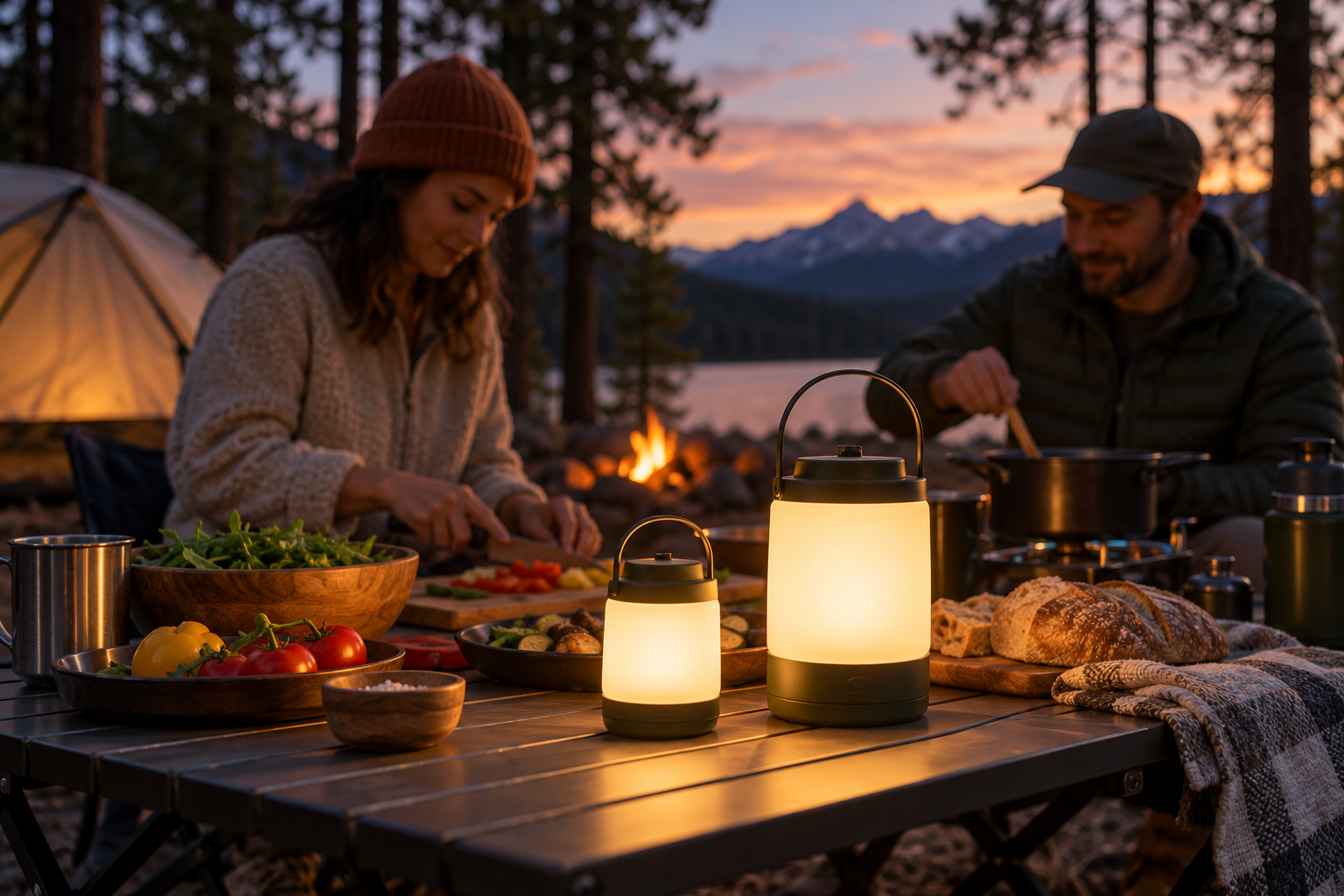
Quick verdict: The AlpenGlow 250 is the more sensible choice for a small personal camp setup. Choose the 500 when you regularly light a shared table and want more maximum output. The larger battery does not mean twice the runtime at maximum: BioLite lists five hours on high for both.
Research-based buying guide. No hands-on testing is claimed. As an Amazon Associate, Time to Get Outside earns from qualifying purchases.
| Decision | AlpenGlow 250 | AlpenGlow 500 |
|---|---|---|
| Maximum listed light | 250 lumens | 500 lumens |
| Listed weight | 210 g | 380 g |
| Battery capacity | 11.8 Wh | 23.6 Wh |
| Manufacturer runtime | 5 h high; up to 200 h low | 5 h high; up to 200 h low |
Buy for the part of camp you need to illuminate
Twice the maximum lumen rating is useful when a lantern has to serve several people around a table. It is less compelling when the light spends most of its time beside one chair. Think about where you will place it, how close people sit and whether you want a bright working light or a comfortable glow after dinner.
My recommendation is the 250 for a solo traveller, a small tent or a couple who already have headlamps for tasks. I would consider the 500 for a shared dining area. That is a buying judgment based on their output ranges, not a measured claim that the larger lantern illuminates twice the area.
The runtime trap in the bigger battery
BioLite lists 250 and 500 lumens respectively, with battery capacities of 11.8 and 23.6 watt-hours. It lists five hours on high and up to 200 hours on low for both models. The larger version uses its extra energy to deliver more light at its own maximum setting.
Do not read the capacity figures as a promise that the 500 will last twice as long in every comparable use. Brightness settings matter, and we have not measured these lights at matched output. Plan your evenings around a charging reserve instead of the longest advertised low-mode figure.
Weight matters differently in a car and a backpack
The listed weights are 210 grams for the 250 and 380 grams for the 500. A 170-gram difference is easy to overlook in the boot of a car. In a walking kit, it joins the weight of food, water, batteries and every other item you decide to carry.
If the lantern travels only from the car to a picnic table, choose on useful light and storage space. If it must fit in a daypack, ask whether you need a dedicated lantern at all or whether your headlamp already covers the trip. Buying the smaller model is good value only when it still performs the job you are giving it.
Charging and phone backup are shared conveniences
Both compared versions use Micro-USB input and offer a USB-A output. That is worth noticing if the rest of your charging kit has moved to USB-C. Pack the right cable, and verify the current listing rather than assuming a familiar connector from the product photographs.
The USB output can be a useful contingency, but charging a phone draws from the same energy you wanted for lighting. For several nights, I would bring a separate phone-power plan rather than buy a lantern mainly as a power bank. Do not pay extra for emergency charging capacity you expect to use for two jobs at once.
Who should buy—and who should skip?
Choose AlpenGlow 250: You want an easily packed light for a small setup and do not regularly need the 500-lumen ceiling.
Choose AlpenGlow 500: You routinely share a table, value the extra available brightness and are comfortable with the larger body and weight.
Skip the purchase: You have a functioning lantern with suitable brightness and runtime. Colour effects or a bigger capacity number alone are weak reasons to replace it.
Final buying recommendation
Buy the 250 for a compact personal setup; pay for the 500 when a shared campsite genuinely needs the extra light. If both meet your needs, the lower complete purchase cost is the better value. Neither needs replacing just because a newer camping trip is on the calendar.
Compare U.S. and Canadian listings
These buttons open product searches. Match the exact model, size, generation, seller and included accessories; they do not guarantee stock or a fixed price. Canadian shoppers should compare the final total in Canadian dollars, including shipping and any import charges.
Related outdoor buying guides
- Best Rechargeable Camping Lanterns for Tent and Table
- Camping Lantern vs Headlamp: Which Should You Pack First?
Sources and research notes
Product details checked October 16, 2026. Specifications and limits below come from the manufacturers; buying recommendations are editorial judgments, not independent performance measurements.