
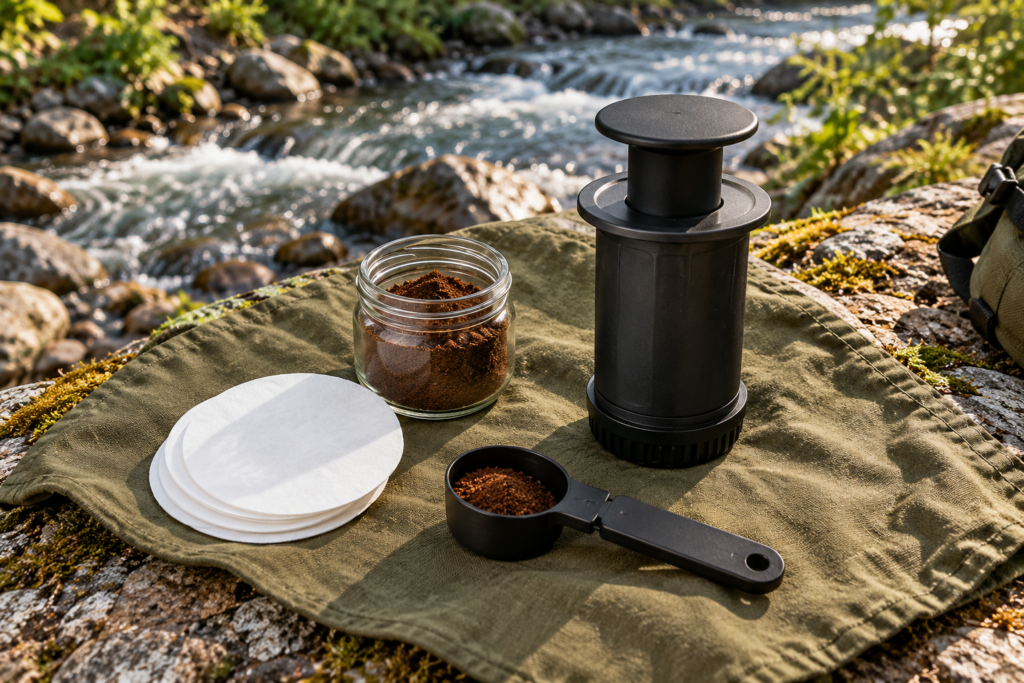
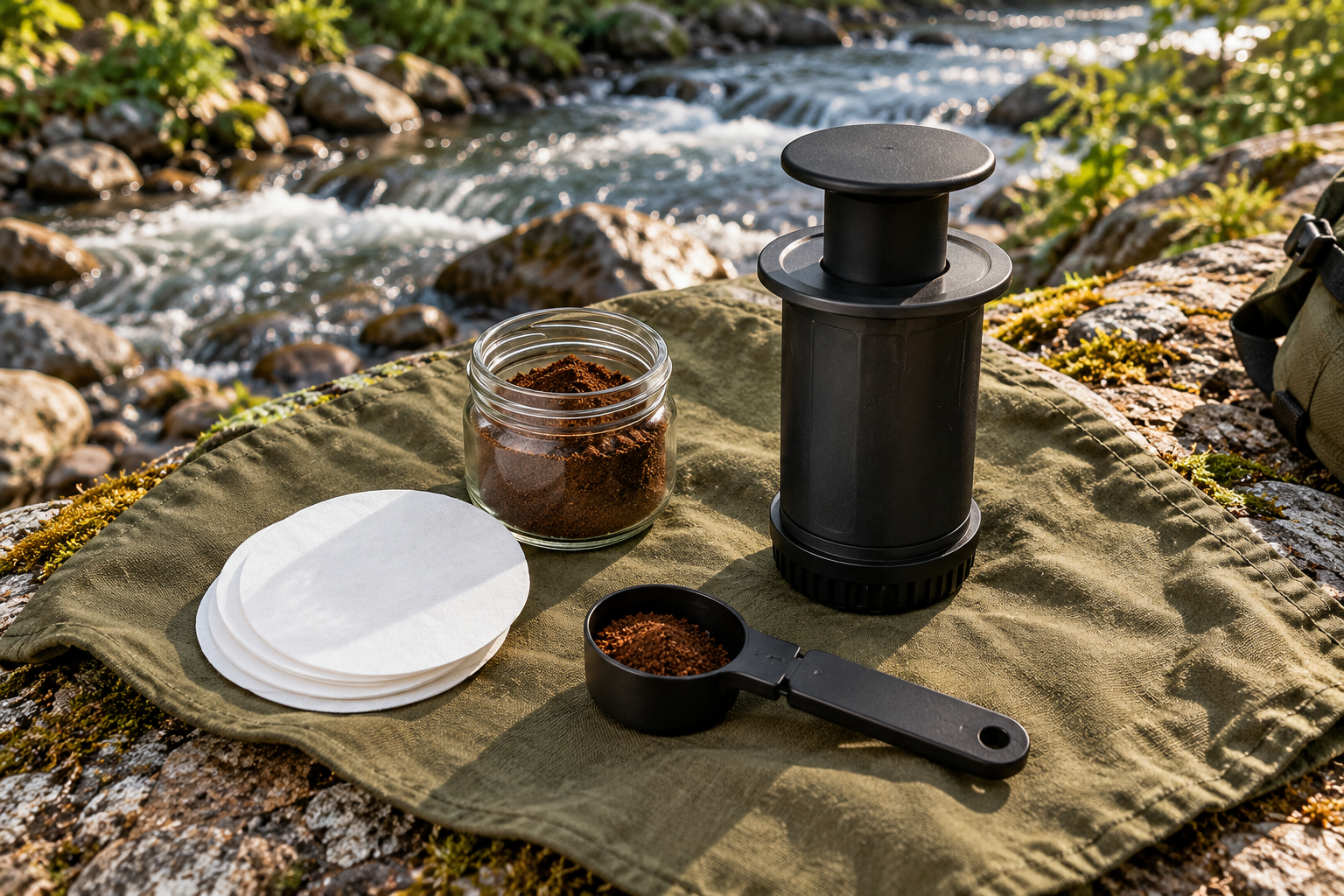
Quick verdict: Choose Original for one modest serving and a smaller kit. Choose XL when its 20-ounce brewing capacity regularly saves a second brewing cycle, especially for two campers; check the larger filters and carafe as part of the complete setup.
Research-based buying guide; no hands-on testing is claimed. As an Amazon Associate, Time to Get Outside earns from qualifying purchases.
| Decision | How the options compare |
|---|---|
| Listed brew capacity | Original: 10 US fl oz Original XL: 20 US fl oz |
| Filter size | Original: Standard Original XL: XL |
| Included serving container | Original: Check the selected package; standard kit has no carafe Original XL: 20-ounce Tritan carafe |
Buy for the coffee you prepare each morning
The relevant upgrade is brewing volume. AeroPress lists a 10-ounce capacity for Original and 20 ounces for Original XL. Those are US fluid ounces, and the manufacturer’s cup counts do not necessarily match the size of your camping mugs. Start with the amount you actually pour rather than a vague promise to serve several cups.
Original makes sense for a solo camper who is satisfied with its serving or does not mind brewing again. XL becomes more interesting when two people regularly want coffee at the same time. Its extra chamber capacity can simplify that routine, but it also creates a larger package to store, carry and clean.
The larger brewer changes the filter kit
Original uses Standard-size filters, while XL requires the appropriate XL filters. Do not assume the paper supply from an existing smaller brewer transfers with the upgrade. Include the right filters in the initial cost and make sure replacements are practical to obtain before buying around a clearance offer.
The current XL package includes a 20-ounce Tritan carafe. That gives the brewer a matched receiving container, while the Original’s standard package does not include the same carafe. Check exactly what the seller supplies, because accessory bundles and a brewer-only price are different comparisons.
Check campsite space and the rest of the system
The listed dimensions are roughly 5.25 inches high by 4.2 inches wide for Original, and 7.6 by 4.6 inches for Original XL. Use these as a shortlist rather than proof that the whole packed kit fits a particular bag. The carafe, coffee supply and kettle also need space.
A bigger chamber does not automatically produce better flavour or eliminate the need for suitable preparation. It changes the size of the batch you can brew. Compare whether your normal water-heating and serving setup benefits from that capacity, or whether a smaller kit already handles your daily routine comfortably.
When keeping the Original is the better buy
Keep Original when it works, replacement filters are already in your kit and the occasional second pressing is not a problem. Buy XL when repeated larger batches make its extra volume useful on most trips. For a camper who usually drinks one modest cup, paying for unused brewing space is difficult to justify.
Compare complete Canadian-dollar costs, including the correct filters and any serving container you would otherwise buy. Check the current cleaning instructions and keep both products away from direct stove heat. My recommendation is Original for a compact single-serving routine and XL for regularly shared campsite coffee, rather than an upgrade based on size alone.
Compare current U.S. and Canadian listings
These buttons open product searches, not guaranteed stock or fixed prices. Match the exact model, size, included accessories and seller before ordering. Canadian shoppers should compare the final cost in Canadian dollars, including any shipping or import charges.
Related buying guides
- Best Camping Coffee Makers for Better Mornings Outdoors
- AeroPress Go vs Wacaco Nanopresso: Which Coffee Maker Is Better for Camping?
- Pour-Over vs French Press for Camping: Which Coffee Setup Is Easier to Own?
Sources and research notes
Specifications and guidance checked October 16, 2026. Recommendations are editorial judgments based on the cited details and use cases; they are not independent performance measurements.