
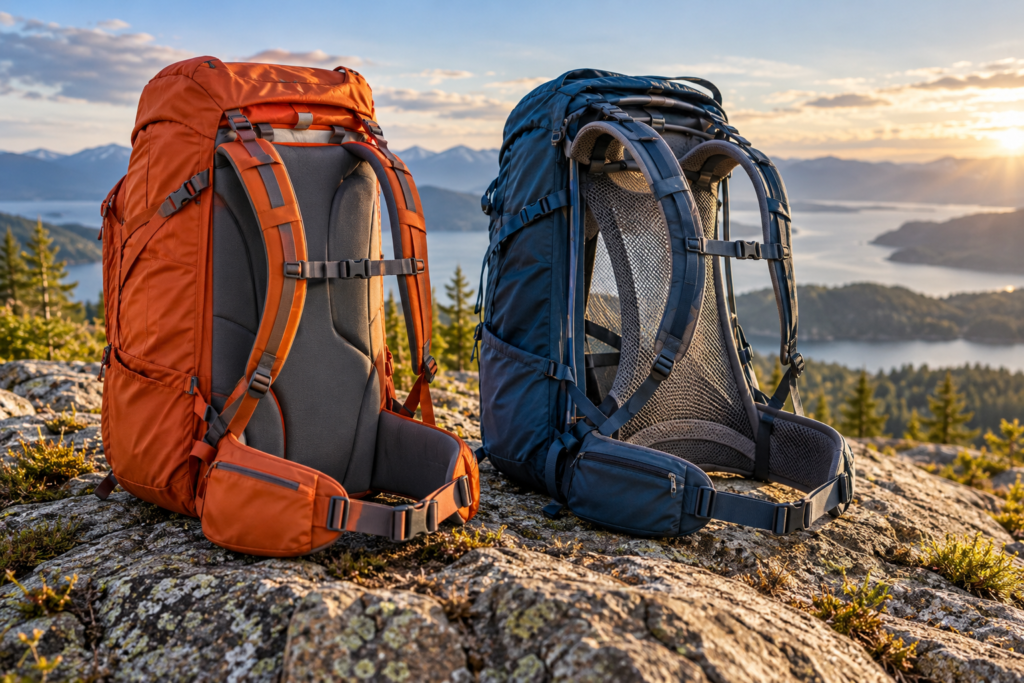
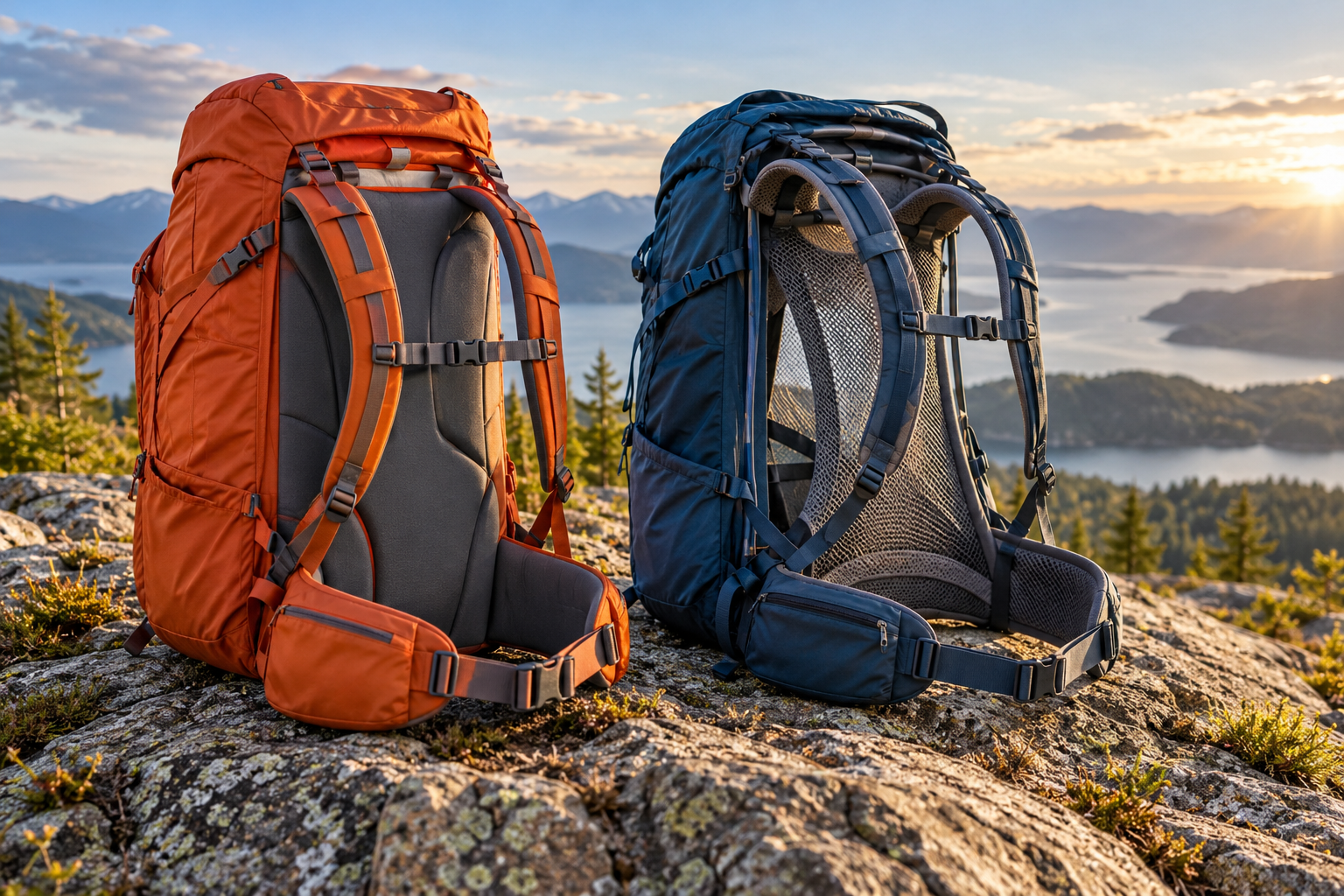
Quick verdict: Choose Talon 22 for a closer-moving carry style and a lighter current listed pack. Choose Stratos 24 when its suspended-mesh support, layout and included raincover justify the added weight and cost for your hikes.
Research-based buying guide; no hands-on testing is claimed. As an Amazon Associate, Time to Get Outside earns from qualifying purchases.
| Decision | How the options compare |
|---|---|
| Back system | Talon 22: Close-to-body AirScape design Stratos 24: AirSpeed suspended mesh with perimeter frame |
| Current listed weight | Talon 22: 1.08kg Stratos 24: 1.34kg |
| Current Canadian price snapshot | Talon 22: CAD230 before final checkout costs Stratos 24: CAD260 before final checkout costs |
The back system is the main decision
Talon 22 and Stratos 24 have similar day-hiking capacities but different carrying arrangements. Osprey describes Talon’s closer-moving AirScape design for hiking and other active uses. Stratos uses a frame that tensions a suspended mesh backpanel. The choice is about the fit and carrying behaviour you prefer, not simply two extra litres.
Try both with a representative load and the clothing you normally wear. A ventilated gap can be appealing, but no back system guarantees a sweat-free walk. A pack that feels comfortable on another person’s back may not place the hipbelt or shoulder straps correctly on yours.
When Talon is the better value
Talon is attractive when you want a pack that feels closer to your body and you use the equipment attachments or accessible pockets. Check the specific current version because older Talon reviews may describe different sizing, weights or details. The reviewed Canadian listing is not interchangeable with every discounted pack carrying the same name.
Osprey lists the reviewed Talon at 1.08kg and Stratos at 1.34kg, a 260g empty-pack difference. That is useful context for carrying, not proof that the lighter pack will feel better with your load. Comfort and stability can matter more than the weight difference on a scale.
When Stratos earns its premium
Stratos deserves a close look when you prefer its suspended-mesh feel, support arrangement and storage layout. Its current listing includes a raincover, which belongs in a fair package comparison. A raincover does not turn the whole bag into a submersible container or eliminate the need to protect sensitive contents appropriately.
Check access to the main compartment, layer storage and the hipbelt pockets with the pack loaded. The litre figure cannot tell you whether your particular jacket or camera kit will fit conveniently. Do not pay more for a feature that makes the packing routine less useful to you.
Compare the exact generation and final price
The reviewed Canadian pages showed CAD230 for Talon and CAD260 for Stratos, a CAD30 difference before delivery and tax. Treat those as checked price snapshots and confirm stock, colour, generation and seller. A sale on an older model can change the value calculation considerably.
My preference is Talon for a well-fitting closer-carry setup and Stratos when its frame and ventilation arrangement feel meaningfully better under your actual load. Check the appropriate fit option rather than assuming the men’s-labelled models suit every body. Keep a sound daypack if it already carries your ordinary kit comfortably; the upgrade should solve a repeated problem, not just add a newer name.
Compare current U.S. and Canadian listings
These buttons open product searches, not guaranteed stock or fixed prices. Match the exact model, size, included accessories and seller before ordering. Canadian shoppers should compare the final cost in Canadian dollars, including any shipping or import charges.
Related buying guides
- Osprey Daylite vs Deuter Speed Lite 13: Which Small Daypack Fits Your Walks?
- Osprey Daylite vs Daylite Plus: Is the Extra Daypack Space Worth It?
- Framed vs Frameless Hiking Backpack: Which Carries Better?
Sources and research notes
Specifications and guidance checked October 15, 2026. Recommendations are editorial judgments based on the cited details and use cases; they are not independent performance measurements.