
Quick verdict: A battery projector is useful when moving away from an outlet is a real requirement and its battery-mode picture lasts long enough. A plug-in projector can be better value for a regular backyard setup with suitable power. Compare brightness and runtime in the same operating mode.
Research-based buying guide; no hands-on testing is claimed. As an Amazon Associate, Time to Get Outside earns from qualifying purchases.
| Decision | How the options compare |
|---|---|
| Main benefit | Built-in battery: A cordless viewing session within its limits Plug-in operation: No projector-battery runtime limit while powered |
| Hidden trade-off | Built-in battery: Battery mode may reduce brightness Plug-in operation: Needs an appropriate power arrangement |
| Buying test | Built-in battery: Whole movie at the actual setting Plug-in operation: Picture quality and complete setup cost |
Battery hours and picture brightness are linked
A long battery figure may describe a lower-brightness mode rather than the image shown in a promotional photograph. Nebula’s Mars 3 documentation specifies different runtime conditions and modes, while its Mars 3 Air guide describes an Eco setting that lowers brightness to extend playtime.
Do not compare one projector’s maximum plugged-in brightness with another’s longest battery runtime as though both happen together. Look for the picture mode, volume, playback source and test conditions behind the claim. Choose around the session you actually want to watch.
When cordless earns its premium
Consider a battery projector when the viewing location changes often or a suitable outlet is genuinely inconvenient. Include setup time, film length and the way you plan to finish the session. Check whether the projector can use an approved power source if its internal battery runs low.
A built-in battery does not make every part of the setup cordless. Your streaming device, network equipment or separate speaker may still need power. Confirm that the intended content source and audio arrangement work without adding an unexpected cable back to the house.
Why plug-in can be a better backyard buy
If movies happen in the same spot near suitable power, a plug-in arrangement may provide the experience without paying for a large internal battery. Compare actual usable picture quality, focus controls and connection options rather than prioritizing portability you will rarely need.
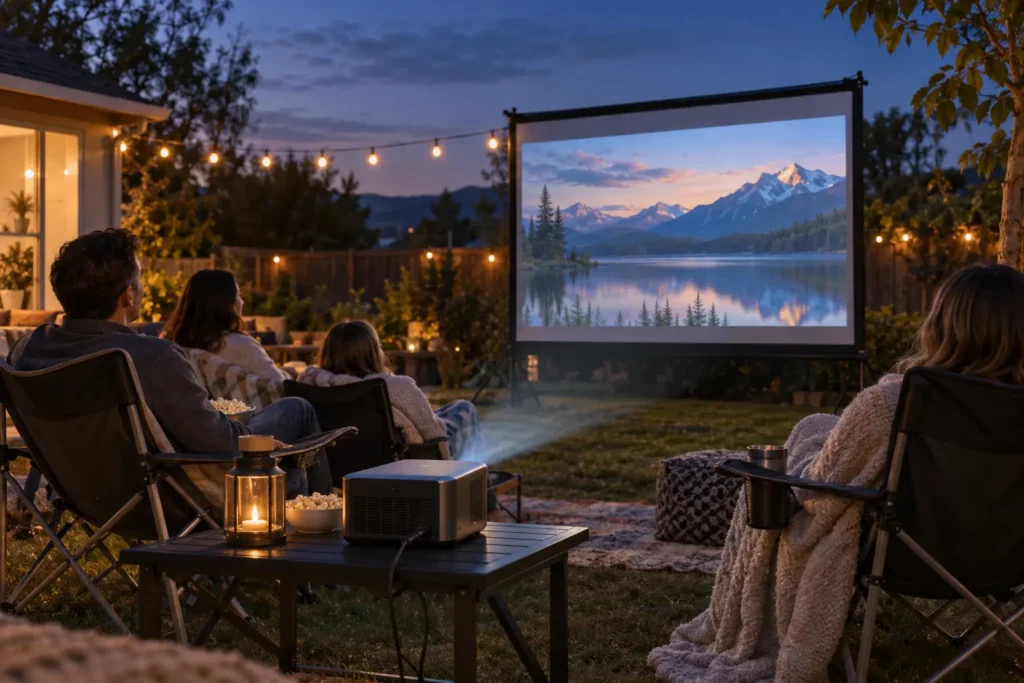
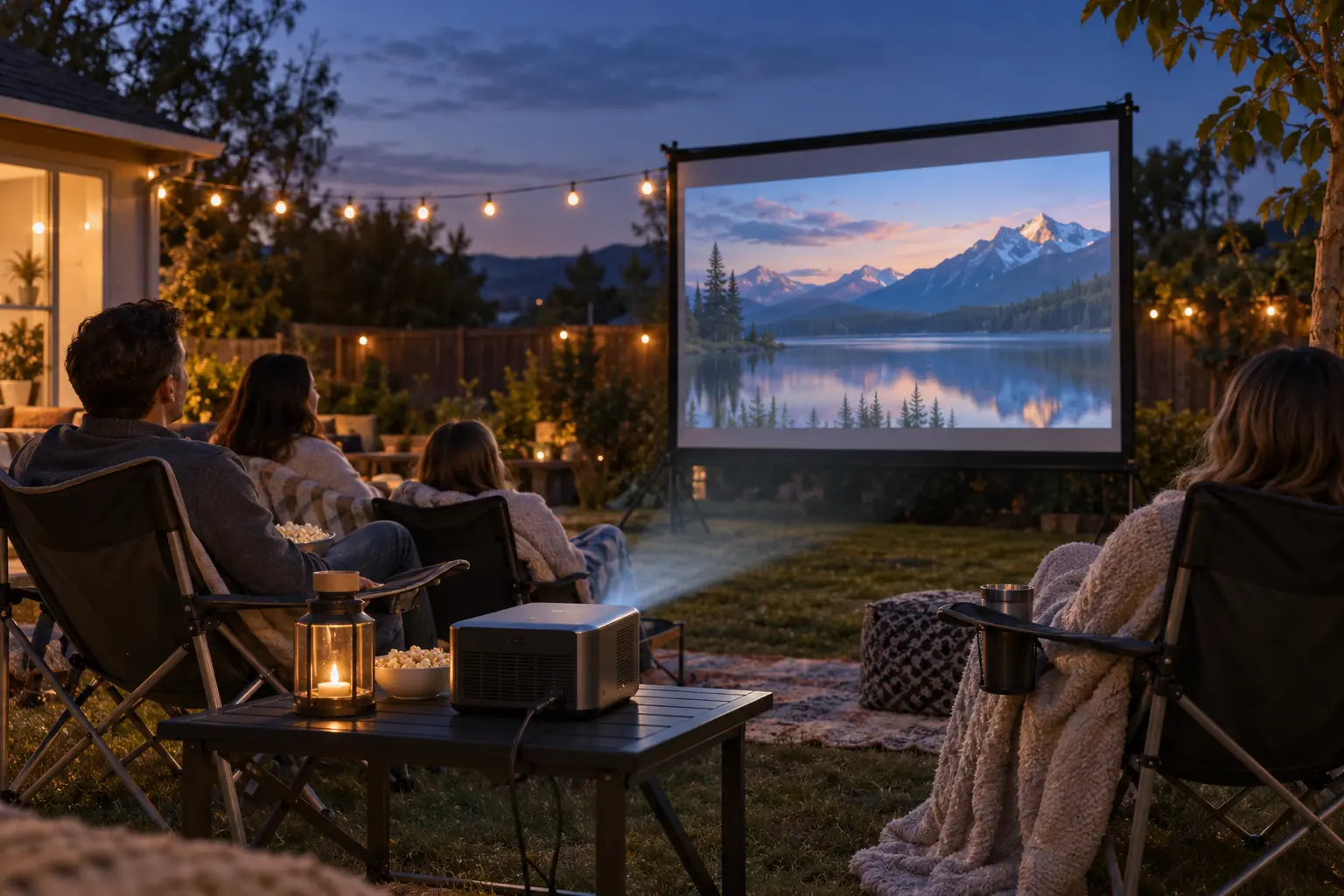
Outdoor viewing still depends on ambient light and the screen arrangement. A portable projector is not automatically weatherproof, and even a model with a stated protection rating has limits. Follow the exact product’s use and storage instructions rather than treating a lifestyle image as installation guidance.
Price a complete movie night
Include the screen, supported power arrangement, content source and audio in the budget. Check that required streaming apps and device connections are currently supported. A low projector price is not good value if the desired service needs another purchase or the whole system is awkward to operate.
Canadian buyers should compare final CAD costs, battery service options and the return process. Choose battery power for a realistic cordless session at an acceptable picture setting. Choose plug-in when a regular powered setup covers the job. Keep a working projector when the only proposed improvement is a battery you would normally leave connected to power anyway.
Compare current U.S. and Canadian listings
These buttons open product searches, not guaranteed stock or fixed prices. Match the exact model, size, included accessories and seller before ordering. Canadian shoppers should compare the final cost in Canadian dollars, including any shipping or import charges.
Related buying guides
- Best Portable Projectors for Backyard Movie Nights
- Best Outdoor Movie Screens for Backyard Nights
- Folding-Frame vs Inflatable Outdoor Movie Screen: Which Is Easier for Backyard Nights?
Sources and research notes
Specifications and guidance checked October 15, 2026. Recommendations are editorial judgments based on the cited details and use cases; they are not independent performance measurements.