
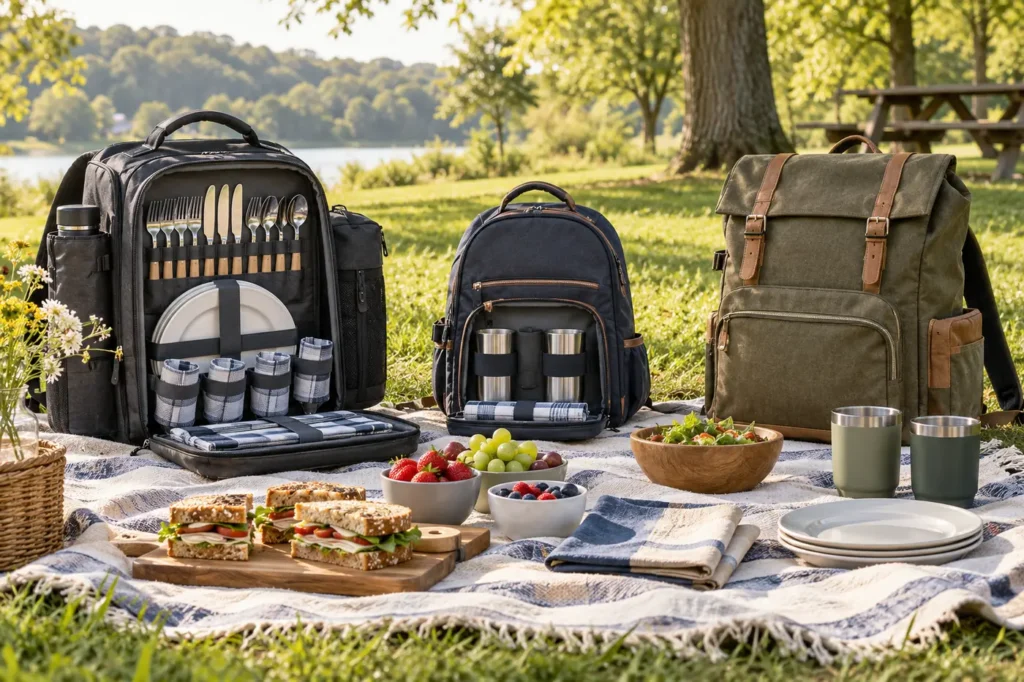
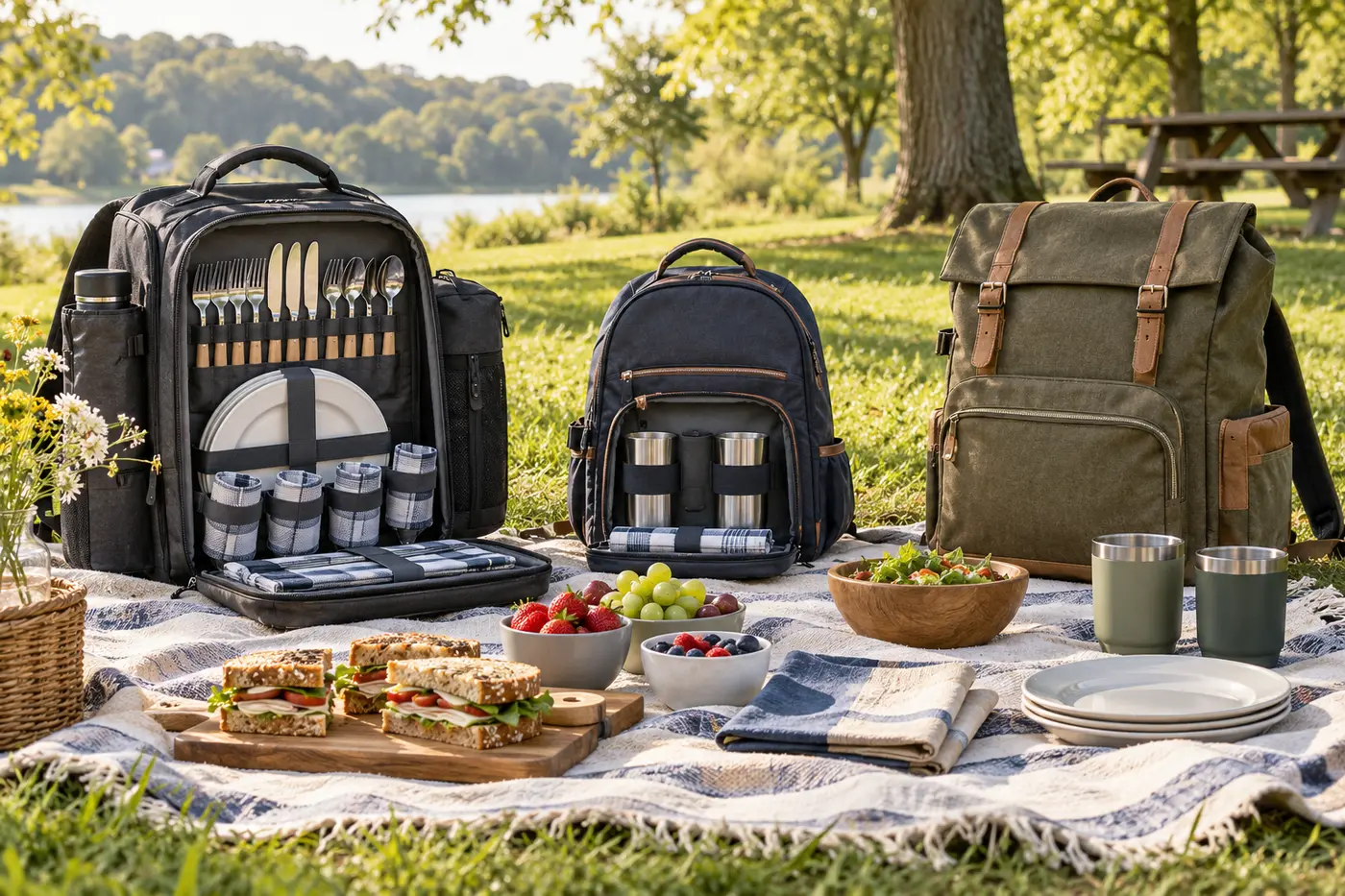
Quick verdict: Choose a picnic backpack when an organized tableware set is something you will use. Choose a cooler backpack when food, drinks and flexible packing space matter more. Check actual contents because the two product labels overlap.
Research-based buying guide; no hands-on testing is claimed. As an Amazon Associate, Time to Get Outside earns from qualifying purchases.
| Decision | How the options compare |
|---|---|
| Main attraction | Picnic backpack with tableware: Organized plates, utensils and meal accessories Cooler backpack: Flexible insulated storage |
| Before paying | Picnic backpack with tableware: Count place settings and useful components Cooler backpack: Check usable space after ice packs |
| Common mistake | Picnic backpack with tableware: Buying accessories you already own Cooler backpack: Assuming every insulated bag is leakproof |
Read the contents rather than the category name
A picnic backpack can also be a cooler, and a cooler backpack can include dining accessories. The useful distinction is whether you are paying for a complete meal set or mainly insulated carrying space. Check the exact package rather than treating the names as fixed technical categories.
Picnic Time sells both equipped picnic backpacks and simpler cooler backpacks. Its PT-Frontier is an example of the equipped approach, while the PTX emphasizes insulated storage. Compare what you receive and what you will actually carry to your usual picnic.
When the tableware bundle earns its place
An equipped backpack can be convenient if you like everything organized and want a ready-to-pack meal kit. Count the place settings against the people you normally feed. Check whether the plate size, utensils and bottle accessories suit your food instead of buying a long component list.
If you already own picnic tableware you enjoy using, a bundle may duplicate it while reducing flexible packing room. A simpler insulated pack plus a small utensil pouch can be the better purchase. You can also replace a missing fork without having to match an elaborate built-in arrangement.
Compare useful volume with a real lunch
Plan the actual containers, drinks and ice packs you expect to pack. A headline can capacity does not tell you whether a lunch box fits through the opening. Check internal dimensions and the shape of the compartment rather than relying only on an overall liter figure.
Read the difference between a water-resistant interior and a leakproof construction. Zippers and seams can matter if the bag tips over. Follow the maker’s cooling and cleaning guidance, and keep the packed arrangement realistic instead of assuming tableware accessories improve insulation.
Buy around the walk to the picnic spot
Comfortable straps, access to the opening and the total loaded weight matter even on a short walk from the car. If possible, try a similar packed weight before choosing a large model. A dedicated set can be pleasant for leisurely meals but unnecessary for carrying sandwiches to a nearby bench.
For Canadian buyers, compare complete CAD costs with any required ice packs and tableware included. Choose the equipped backpack if its organization saves effort on regular outings. Choose the cooler-focused option if flexible storage is the benefit you need. Keep a working insulated bag when a separate utensil pouch solves the only problem.
Compare current U.S. and Canadian listings
These buttons open product searches, not guaranteed stock or fixed prices. Match the exact model, size, included accessories and seller before ordering. Canadian shoppers should compare the final cost in Canadian dollars, including any shipping or import charges.
Related buying guides
- Best Picnic Backpacks for Outdoor Meals
- Best Cooler Backpacks for Beach Days, Picnics and Short Hikes
- Best Folding Wagons for Beach Trips, Camping and Outdoor Events
Sources and research notes
Specifications and guidance checked October 15, 2026. Recommendations are editorial judgments based on the cited details and use cases; they are not independent performance measurements.