
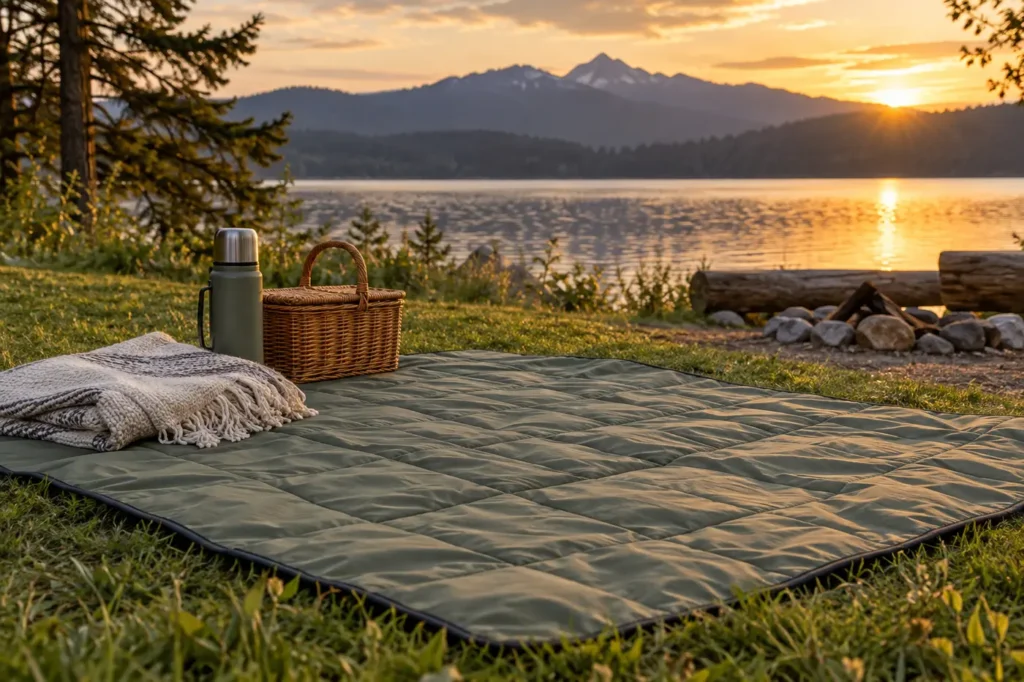
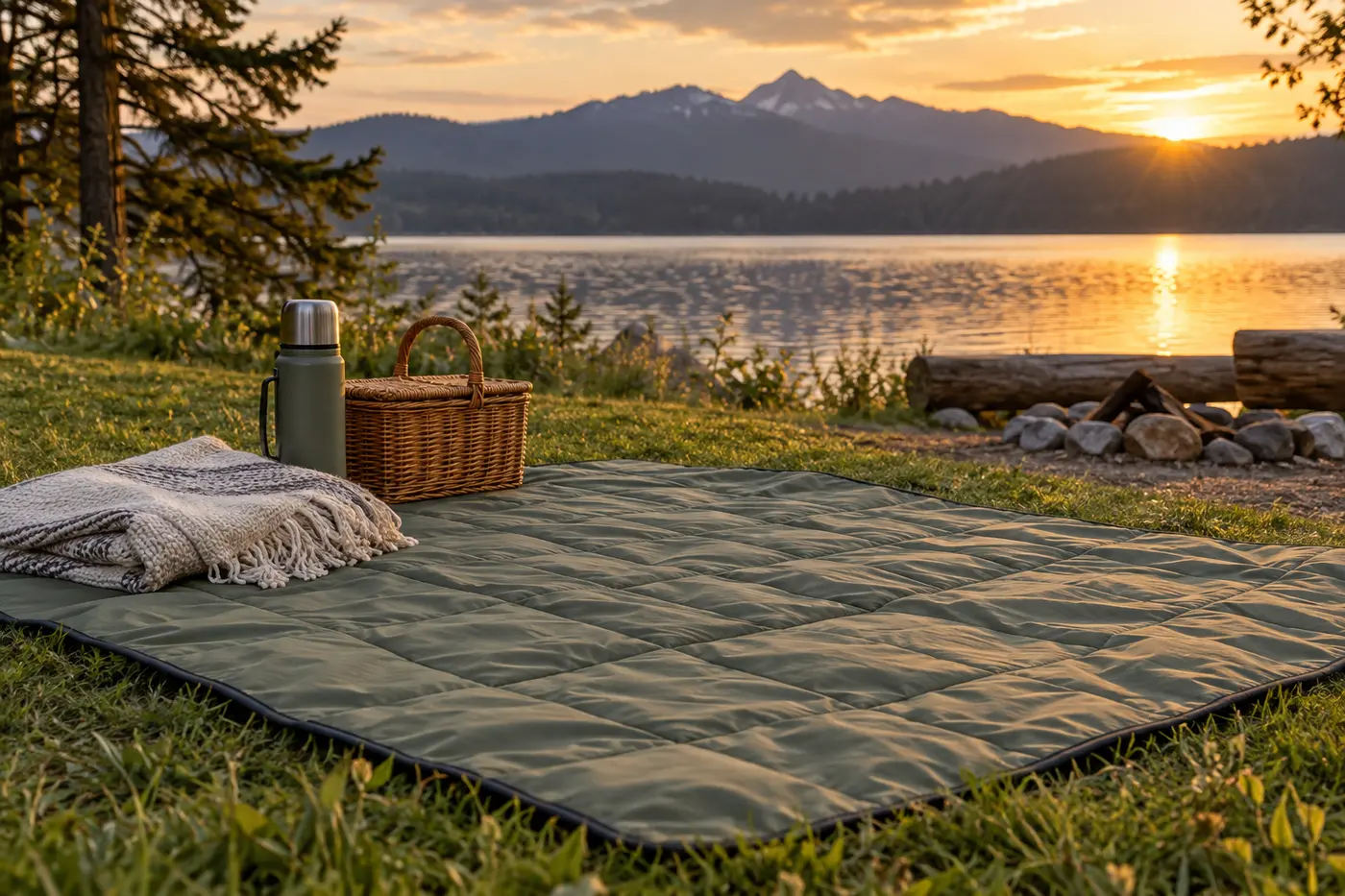
Quick verdict: Choose wool if you enjoy its feel and accept the exact blanket’s care requirements. A synthetic outdoor blanket is often the more practical buy for frequent packing and easy cleanup. Waterproof ground protection is a separate feature to verify.
Research-based buying guide; no hands-on testing is claimed. As an Amazon Associate, Time to Get Outside earns from qualifying purchases.
| Decision | How the options compare |
|---|---|
| Main buying test | Wool blanket: Comfort, composition and care Synthetic outdoor blanket: Construction, packed size and cleaning |
| Laundry | Wool blanket: Some are washable; others require dry cleaning Synthetic outdoor blanket: Follow the specific fabric and insulation instructions |
| Ground use | Wool blanket: Wool alone is not a waterproof backing Synthetic outdoor blanket: Water resistance does not guarantee waterproofing |
Choose the blanket’s job first
A blanket wrapped around your shoulders has a different job from one laid on damp grass. Decide which use comes first before comparing fibers. If you need a ground barrier, check the backing and seams rather than assuming a thick fabric will keep moisture away.
A wool throw, a fleece blanket and a synthetic insulated camping blanket are different constructions. Compare a usable size and the complete packed item. A small light throw is not a fair substitute for a two-person blanket simply because the listing uses the same outdoor description.
When wool is worth the premium
Wool makes sense when you like its feel and expect to use the blanket at home as well as outside. That can make a quality piece useful beyond a few camping nights. Check the actual wool percentage and size rather than paying for an attractive pattern alone.
Care varies. Pendleton’s guidance says to follow the label and identifies washable products separately from items needing dry cleaning. Do not assume a wool blanket accepts your regular laundry routine. Include that upkeep in the purchase decision before taking it to messy picnics or muddy campsites.
Where synthetic offers practical value
A synthetic outdoor blanket can be convenient for repeated packing, casual events and a routine that includes regular washing. Check whether it is a simple fleece or a shell-and-insulation design; those can feel and pack quite differently.
Rumpl’s Original Puffy is an example of a synthetic insulated product with model-specific washing instructions and a water-repellent finish. The company explicitly distinguishes water resistance from complete waterproofing. That distinction matters when the blanket will sit on wet ground rather than briefly encounter a splash.
Avoid buying warmth by material name
Neither fiber label supplies a universal temperature rating. Look at the intended use, coverage and construction of the complete blanket. Do not treat an ordinary throw as a replacement for an appropriate overnight sleep system or assume that a more expensive pattern means more insulation.
Canadian shoppers should compare delivered CAD prices, care costs and the space the blanket occupies in the vehicle. Choose wool for comfort you value enough to maintain. Choose synthetic for a useful combination of packing and cleaning features. If an existing blanket already works for dry patio evenings, add a purpose-built ground layer only when damp picnics create a separate need.
Compare current U.S. and Canadian listings
These buttons open product searches, not guaranteed stock or fixed prices. Match the exact model, size, included accessories and seller before ordering. Canadian shoppers should compare the final cost in Canadian dollars, including any shipping or import charges.
Related buying guides
- Best Outdoor Blankets for Picnics, Camping and Cold Evenings
- Picnic Blanket vs Waterproof Sit Mat for Outdoor Events
- Camping Quilt vs Sleeping Bag: Which Is Better for Mild-Weather Car Camping?
Sources and research notes
Specifications and guidance checked October 15, 2026. Recommendations are editorial judgments based on the cited details and use cases; they are not independent performance measurements.