
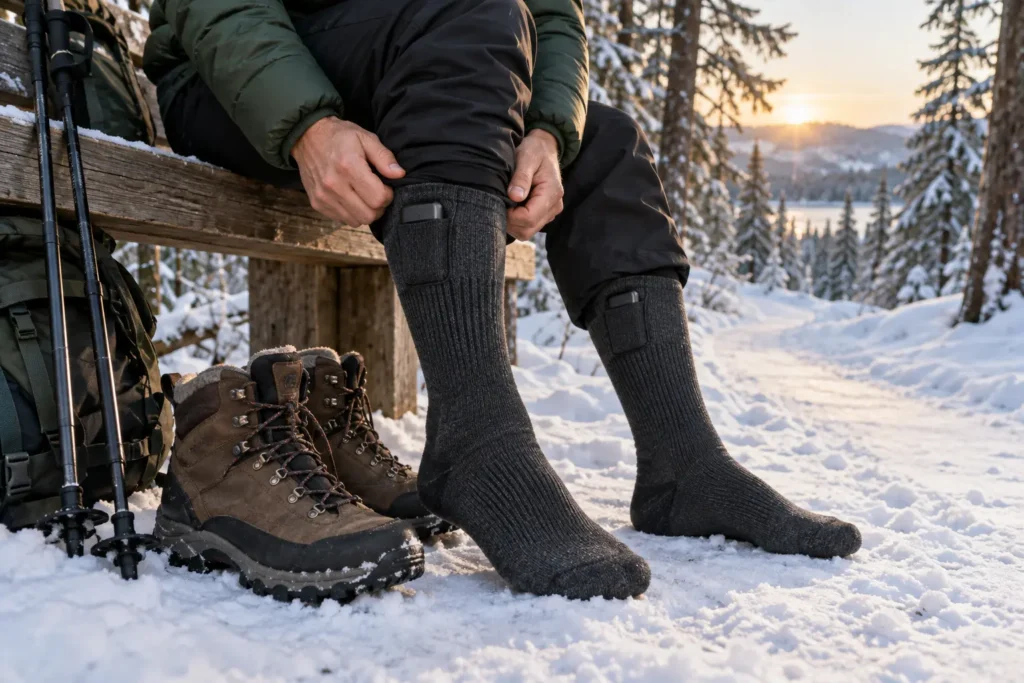
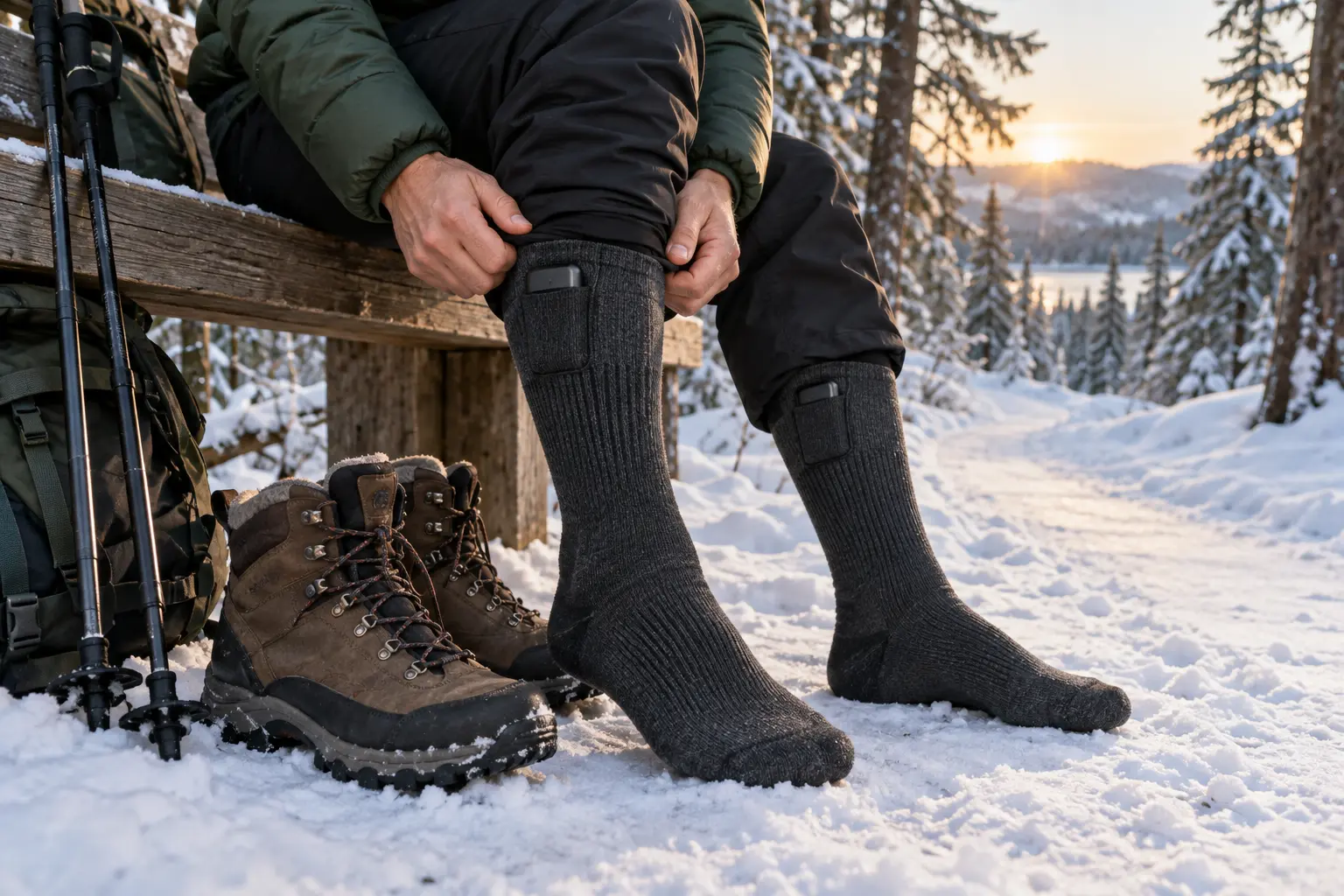
Quick verdict: Heated socks suit someone who wants the heating layer to move between suitable boots. Heated insoles suit a compatible footwear setup with room for the intended replacement insole and cable routing. Confirm fit and the complete battery system before buying either.
Research-based buying guide; no hands-on testing is claimed. As an Amazon Associate, Time to Get Outside earns from qualifying purchases.
| Decision | How the options compare |
|---|---|
| Fit question | Heated socks: Sock thickness and battery position Heated insoles: Footwear volume and insole arrangement |
| Moving between boots | Heated socks: Move socks and compatible batteries Heated insoles: Check each boot’s fit and routing |
| Hidden costs | Heated socks: Battery packs, charger and extra pairs Heated insoles: Insoles, packs, charger and mounting accessories |
Boot fit decides whether the purchase works
Adding thickness inside a boot can spoil an otherwise comfortable fit. Try the full intended arrangement rather than assuming a heated product will fit because the size label matches. Check room around the toes and where the battery or cable sits when walking.
An insole may be intended to replace the existing footbed rather than stack above it. Follow the specific maker’s fitting instructions, including any permitted trimming and cable routing. Do not cut a heated component based on a generic shoe-insole guide.
Why someone might choose socks
A heated sock can be practical when you use more than one suitable pair of boots and want the heating garment to travel with you. That convenience depends on sock thickness, cuff height and battery placement working with each footwear combination.
Count how many pairs you need for your normal washing routine. One discounted pair may not be the complete answer for daily use. Read washing and drying instructions, battery removal requirements and the availability of replacement socks compatible with the same packs.
Where an insole system makes sense
Insoles can be attractive for a dedicated boot setup when the footbed shape and permitted installation suit you. Check how the external battery attaches and whether the cables remain comfortable through the full range of ankle movement. Look up replacement parts before committing to a system.
Therm-ic distinguishes battery families for different heated products. Its Canadian FAQ describes C-Pack connections for heated insoles; that does not establish compatibility with a sock battery. Buy only the combinations explicitly listed for the model, even when the items share a brand name.
Judge the full Canadian ownership cost
Compare complete kits in CAD, with the necessary pair of batteries and charger included. Budget separately for spare packs only if the manufacturer’s expected runtime at the setting you plan to use makes them useful. Longest-runtime advertising is not a promise for every heat level or outdoor condition.
Choose socks for a garment-based setup that fits your actual boots and laundry routine. Choose insoles for an approved installation in suitable footwear. If the existing boot is already cramped, neither purchase is a sensible workaround. Resolve fit first and keep using a comfortable unheated setup when it already meets your needs.
Compare current U.S. and Canadian listings
These buttons open product searches, not guaranteed stock or fixed prices. Match the exact model, size, included accessories and seller before ordering. Canadian shoppers should compare the final cost in Canadian dollars, including any shipping or import charges.
Related buying guides
- Best Heated Socks for Winter Walking: Rechargeable Picks for Cold Feet
- Best Boot Dryers for Wet Winter Boots and Shoes
- Merino Wool vs Synthetic Hiking Socks: Which Should You Buy?
Sources and research notes
Specifications and guidance checked October 15, 2026. Recommendations are editorial judgments based on the cited details and use cases; they are not independent performance measurements.