
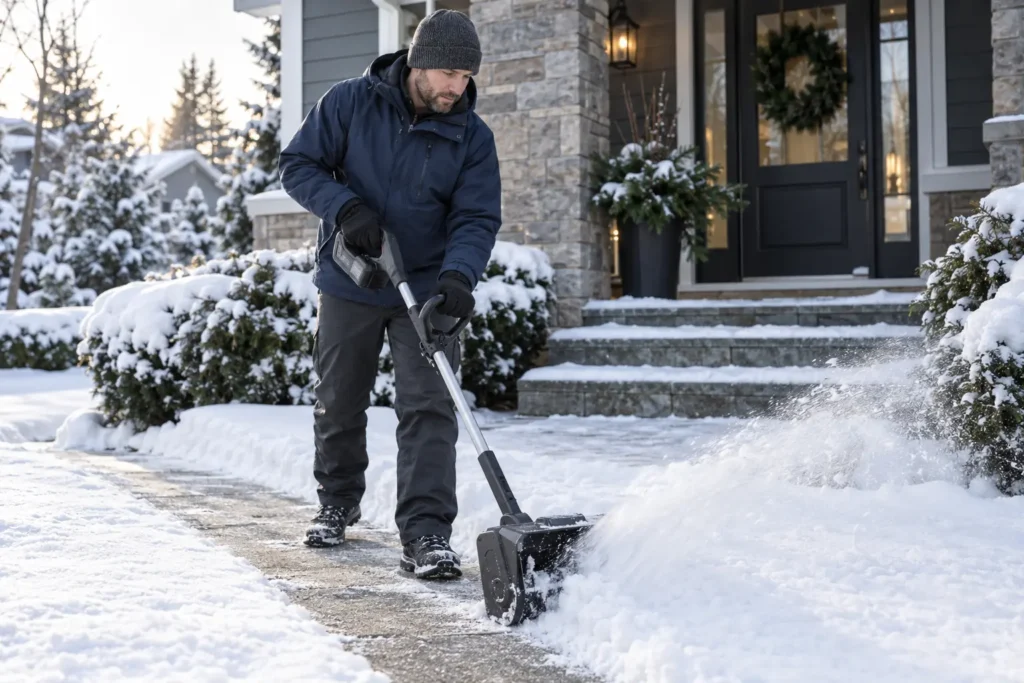
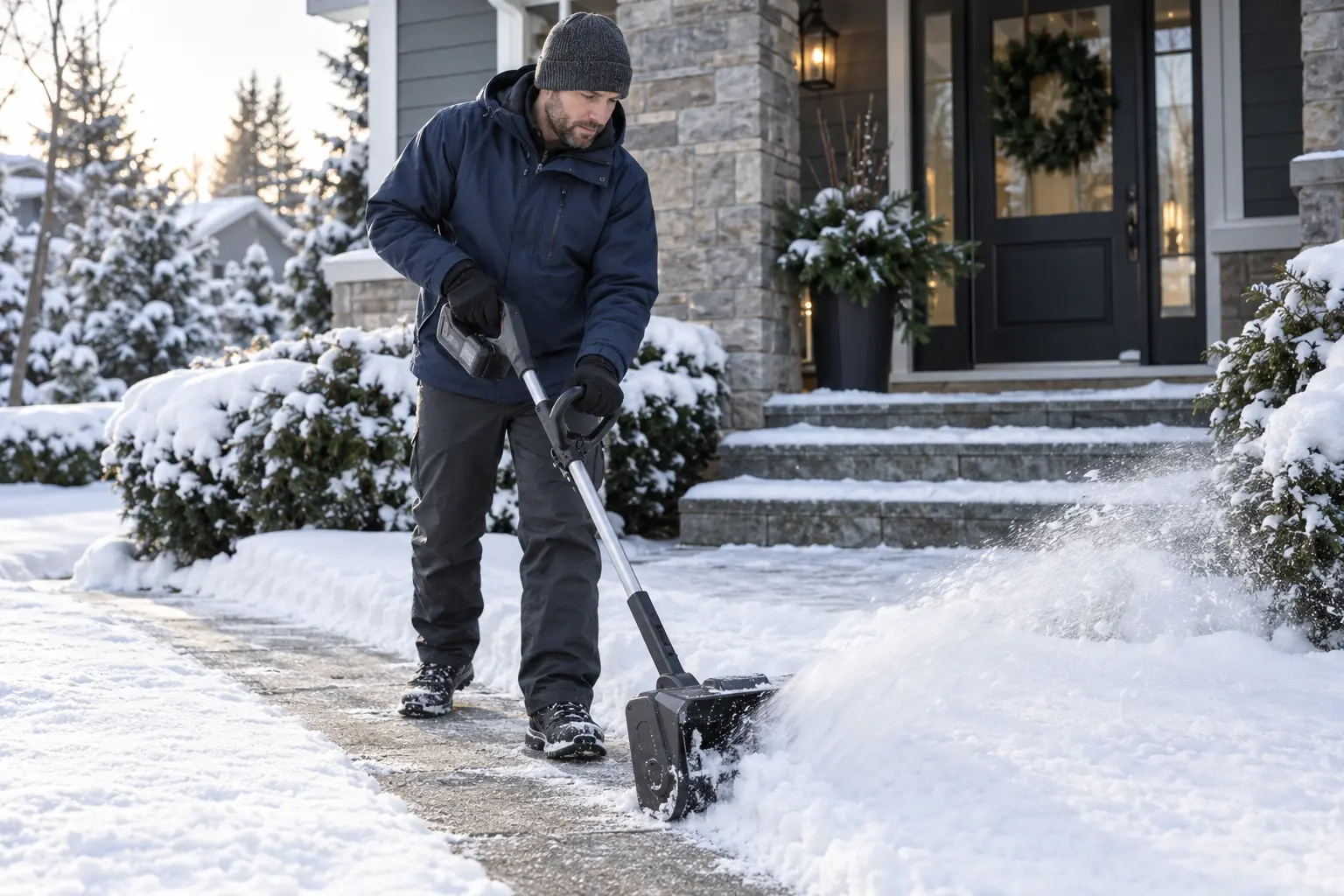
Quick verdict: A manual pusher is often sufficient for small amounts of snow with room to push it aside. A cordless snow shovel can be useful for repeated clearing where controlled throwing suits the space, but battery cost, machine weight and snow conditions decide its value.
Research-based buying guide; no hands-on testing is claimed. As an Amazon Associate, Time to Get Outside earns from qualifying purchases.
| Decision | How the options compare |
|---|---|
| How it moves snow | Cordless snow shovel: Powered mechanism throws snow Manual snow pusher: User pushes snow along the surface |
| Ownership | Cordless snow shovel: Battery, charger and machine upkeep Manual snow pusher: No charging or powered components |
| Fit check | Cordless snow shovel: Weight, throwing direction and approved conditions Manual snow pusher: Blade size, handle and space for snow |
Look at where the snow must go
A pusher works best when there is somewhere sensible to push the accumulation. A powered shovel is worth considering when throwing it to an approved clear area would suit the layout better. Neither tool is a universal solution for every driveway or storm.
Garant describes its all-purpose pusher models around moving light snow over larger areas. EGO’s powered shovel is a different tool with a narrow clearing path and directional throwing control. Compare how those approaches fit your walkway rather than expecting either one to replace every snow-removal task.
Count machine weight as well as power
A cordless tool still needs to be carried, positioned and controlled. EGO lists its SNS1201 kit at 16.7 pounds with the included battery, a useful reminder that powered does not mean weightless. Check the actual assembled weight for whichever model you are considering.
Look at the route from storage to the work area, including any stairs. Consider whether the handle adjusts comfortably and whether the packed tool fits the available space. Avoid treating a motor as a guarantee of effortless operation or a substitute for choosing equipment you can handle comfortably.
Price the complete working kit
Bare-tool listings can look inexpensive when the necessary battery and charger are excluded. Confirm the compatible platform and exact contents before comparing prices. If you already own suitable batteries, check the manufacturer’s compatibility information rather than relying on matching voltage alone.
Read approved surfaces, operating limits and storage instructions for the exact tool. Manufacturer capacity and throwing figures are conditional claims, not promises for heavy, compacted or icy accumulation. Plan separately for jobs beyond the chosen tool’s intended use, and operate it only as directed.
When keeping the manual option makes sense
For occasional light clearing on a short path, a good-fitting pusher may be the least expensive useful purchase. Choose blade width and handle comfort around the space you actually clear; a wider blade is not automatically easier to manage.
For Canadian buyers, compare the complete CAD cost, replacement battery availability and local service support. Buy cordless when frequent suitable clearing and the layout justify the extra equipment. Keep a manual tool for appropriate small jobs and finishing work rather than assuming a powered purchase eliminates every other tool from the winter kit.
Compare current U.S. and Canadian listings
These buttons open product searches, not guaranteed stock or fixed prices. Match the exact model, size, included accessories and seller before ordering. Canadian shoppers should compare the final cost in Canadian dollars, including any shipping or import charges.
Related buying guides
- Best Electric Snow Shovels for Decks, Steps and Walkways
- Best Ice Cleats for Walking on Snow and Ice
- Best Boot Dryers for Wet Winter Boots and Shoes
Sources and research notes
Specifications and guidance checked October 15, 2026. Recommendations are editorial judgments based on the cited details and use cases; they are not independent performance measurements.