
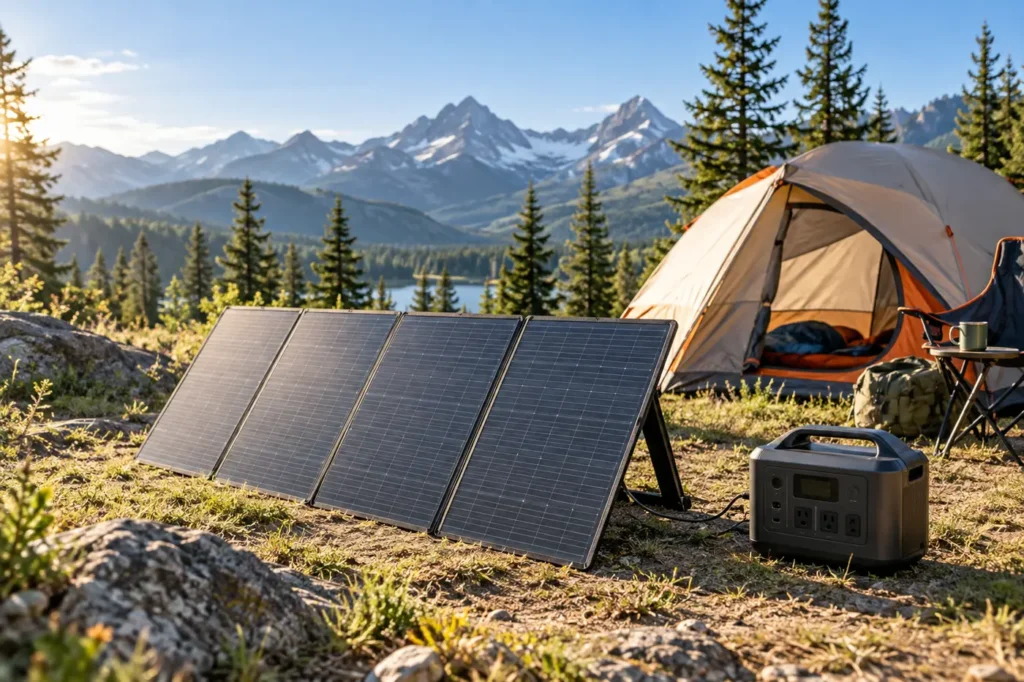
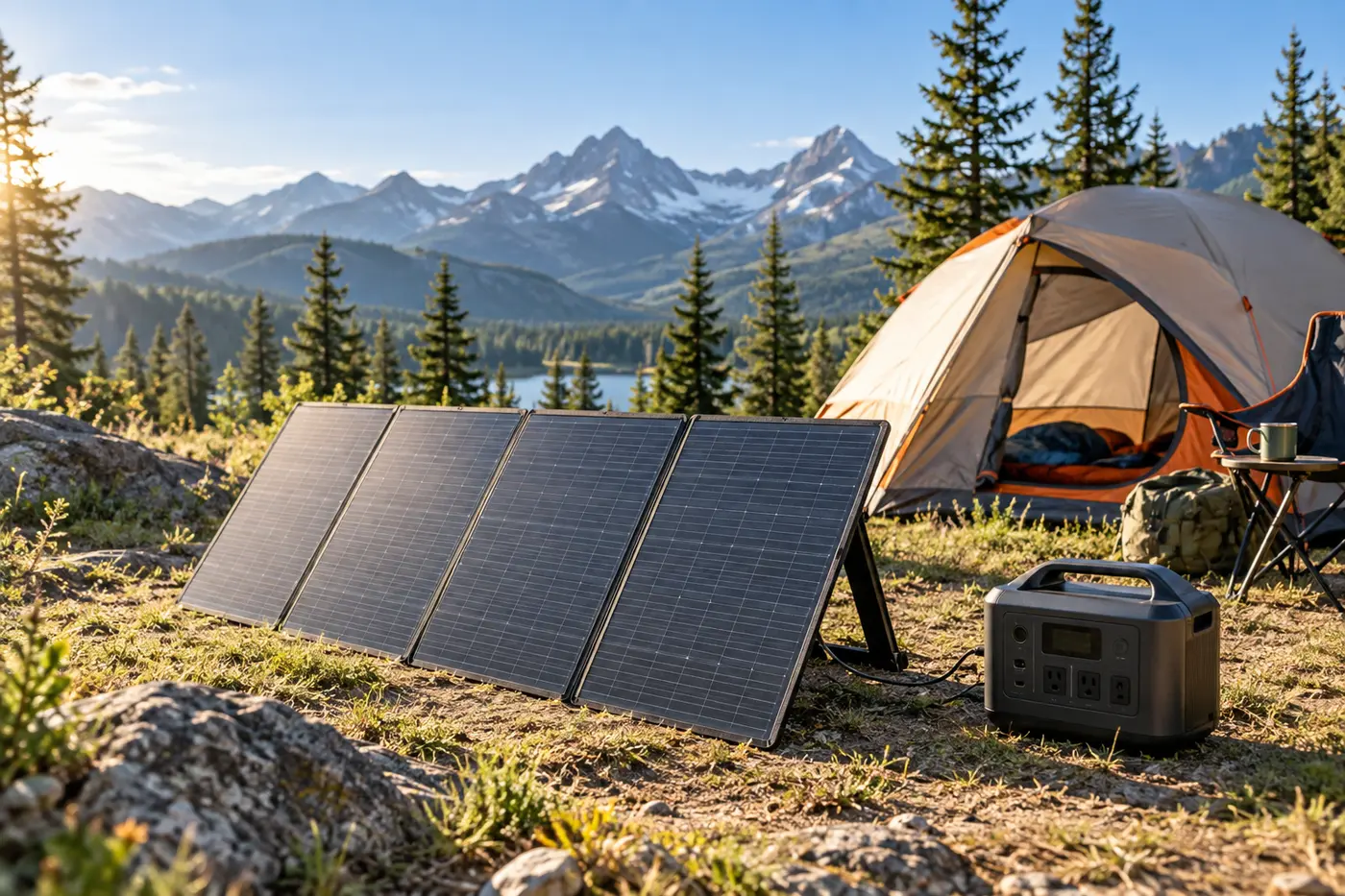
Quick verdict: Choose a folding portable panel when moving it between sun and storage is part of every trip. Choose a suitable rigid panel for a planned mounting or transport arrangement. Verify voltage, current, connectors and charging compatibility before comparing advertised watts.
Research-based buying guide; no hands-on testing is claimed. As an Amazon Associate, Time to Get Outside earns from qualifying purchases.
| Decision | How the options compare |
|---|---|
| Usual role | Rigid panel: A planned installation or protected transport setup Folding portable panel: Repeated deployment and packing away |
| Main constraint | Rigid panel: Dimensions, mounting and storage protection Folding portable panel: Setup space, handling and weather limits |
| Shared requirement | Rigid panel: Compatible controller or power-station input Folding portable panel: Compatible controller or power-station input |
| Buying trap | Rigid panel: Assuming a bare panel is a complete charging system Folding portable panel: Assuming its plug guarantees electrical compatibility |
Pick a system before picking a panel
Solar panels do not become interchangeable because their watt ratings match. The receiving battery system or power station has input limits, and the panel has voltage and current characteristics. A compatible-looking plug is only one part of the connection.
Renogy’s guidance distinguishes rigid panels, folding panels, blankets and portable suitcases. Those categories also overlap: a suitcase can contain rigid sections that fold together. Inspect the construction and packed dimensions instead of relying solely on the word “portable.”
When a rigid panel makes sense
A rigid panel is worth considering when you have a planned mounting arrangement or a way to transport and protect it safely. If it lives on an appropriate vehicle installation, there may be less daily setup than with a panel you unfold at every stop.
That convenience depends on doing the installation correctly. Include suitable mounting, cable routing, weather protection and the required charging equipment in the budget. A discounted bare panel is not the same purchase as a complete portable kit. Follow the relevant equipment instructions and use qualified installation help where needed.
When folding portability is worth paying for
A folding panel can be easier to move into a sunny position while the vehicle or power station remains in an appropriate protected place. It is attractive for occasional campsite charging when permanent mounting is unnecessary.
Measure the open panel as well as the folded package. A compact bag may unfold into a large footprint that competes with paths, chairs and tent lines. Check the supplied stand, cable length and allowed weather exposure. Do not assume a water-resistance rating applies equally to the connectors and attached electronics.
Rated output is not your daily harvest
A panel’s nameplate watts describe specified test conditions. Shade, cloud, angle, dirt and temperature can reduce the power reaching your charger. A larger panel can help only within the receiving system’s limits and the space you can actually use.
For Canadian autumn camping, shorter daylight and a low sun angle can make optimistic summer expectations especially disappointing. Plan around your energy needs and realistic charging opportunities. Keep an alternative plan if the trip depends on power and the weather does not cooperate.
The compatibility checklist that matters
Check panel open-circuit voltage against the receiving input’s maximum, along with the permitted operating range, current and power limits. Verify polarity, connector type and any required cable directly in the manuals. Do not improvise an adapter based on its shape alone.
Charging a bare battery may require a suitable charge controller, while a power station may already contain one. Confirm the exact arrangement instead of assuming another controller always helps. Renogy explicitly advises checking the power station’s requirements for compatible panel connections.
Final buying recommendation
Buy rigid for a properly planned installation; buy folding for useful mobility. Compare the total compatible kit cost, not dollars per advertised watt alone. If your trips are short and mains or vehicle charging already covers them, keep that simpler arrangement until solar solves a real charging gap.
Compare current U.S. and Canadian listings
These buttons open product searches, not guaranteed stock or fixed prices. Match the exact model, size, included accessories and seller before ordering. Canadian shoppers should compare the final cost in Canadian dollars, including any shipping or import charges.
Related buying guides
- Best Portable Solar Panels for Camping and Off-Grid Charging
- Best Portable Power Stations for Camping and Emergencies
- Solar Charger vs Power Bank for Camping: What Is Worth Carrying?
Sources and research notes
Specifications and guidance checked October 15, 2026. Recommendations are editorial judgments based on the cited details and use cases; they are not independent performance measurements.