
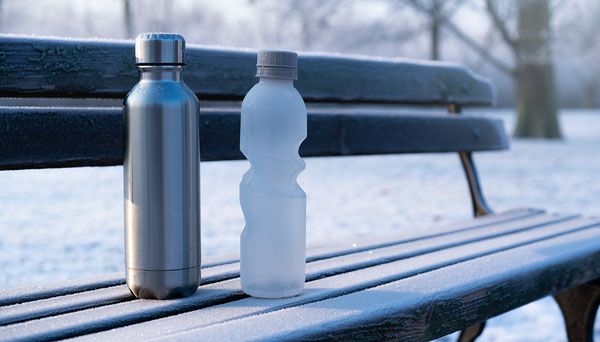
Quick verdict: Choose a single-wall stainless bottle for straightforward everyday use when its weight is acceptable. Consider titanium when a verified weight saving at the capacity you need justifies the price. Neither metal alone tells you whether the bottle is insulated.
Research-based buying guide; no hands-on testing is claimed. As an Amazon Associate, Time to Get Outside earns from qualifying purchases.
| Decision | How the options compare |
|---|---|
| Main attraction | Titanium bottle: Potentially low empty weight Stainless-steel bottle: Broad choice of capacities and closures |
| Fair comparison | Titanium bottle: Same usable capacity and wall construction Stainless-steel bottle: Same usable capacity and wall construction |
| Insulation check | Titanium bottle: Look for an explicit insulated design Stainless-steel bottle: Single-wall steel is also uninsulated |
| Worth paying more? | Titanium bottle: If carried weight is a real constraint Stainless-steel bottle: Often sufficient for ordinary local walks |
Compare construction before comparing metals
The word titanium can make a bottle sound like an automatic upgrade, but material is only part of the purchase. A single-wall titanium bottle and a double-wall vacuum-insulated steel bottle perform different jobs. If keeping a drink cold or hot is the main goal, start with insulation rather than the metal name.
Vargo’s listed titanium bottle provides a concrete example: 650 millilitres at a stated 130 grams. Klean Kanteen’s Classic range includes single-wall stainless designs. Those examples are not identical capacities, so they should not be presented as a direct weight contest without accounting for the water each holds.
When stainless steel is enough
A single-wall steel bottle can be a practical everyday choice when you like its closure, can clean it easily and do not mind its empty weight. For a short neighbourhood walk, a comfortable cap and a secure place to carry it may matter more than saving a few grams.
Choose the opening around how you use the bottle. A narrow opening may suit drinking but complicate cleaning with your existing brush. A sport cap may be convenient while moving but can contain more parts to clean than a simple screw lid.
When titanium is worth considering
Titanium becomes more appealing when reducing carried gear weight is a defined priority and you still want a metal bottle. Check the actual complete weight, including cap, at the capacity you require. Paying more for a smaller bottle does not help if you then need a second container to carry enough water.
The purchase is harder to justify if your present bottle is carried in a vehicle or used only for short breaks. Put a price on the specific weight saving instead of treating titanium as inherently necessary for hiking.
What a premium metal will not fix
A single-wall bottle will not maintain drink temperature like a suitable vacuum flask. It also will not purify water or prevent freezing simply because it is made from an expensive metal. For cold-weather Canadian walks, choose a suitable insulated arrangement when temperature retention is the actual need.
Do not assume a metal bottle is safe to place on a stove. Coatings, closures, seals and the manufacturer’s intended use all matter. Use only the heating methods explicitly allowed for that exact product; a bottle is not automatically cookware.
Check the parts you touch every day
Look for a seal you can inspect and clean, replacement lids that are available to you and a carry loop that works with your bag. Test a new closure with cool water before placing it beside electronics. Check pocket fit with the filled bottle rather than relying only on its empty dimensions.
For online Canadian purchases, include shipping, possible import charges and replacement-cap availability in the cost. Avoid unsupported health claims about one metal being universally safer. Buy a product intended for beverage use and follow its care instructions.
Final buying recommendation
Buy steel for a useful bottle at an acceptable weight; consider titanium for a specific, verified carrying benefit. If insulation, capacity or easy cleaning is the real problem, solve that first. A working bottle that fits your routine is often better value than a material upgrade alone.
Compare current U.S. and Canadian listings
These buttons open product searches, not guaranteed stock or fixed prices. Match the exact model, size, included accessories and seller before ordering. Canadian shoppers should compare the final cost in Canadian dollars, including any shipping or import charges.
Related buying guides
- Nalgene Wide Mouth vs CamelBak Chute Mag: Which Hiking Bottle Is Easier to Use?
- Insulated Bottle vs Regular Water Bottle for Winter Walks
- Soft Flask vs Rigid Bottle for Day Hiking: Which Is Better?
Sources and research notes
Specifications and guidance checked October 15, 2026. Recommendations are editorial judgments based on the cited details and use cases; they are not independent performance measurements.