
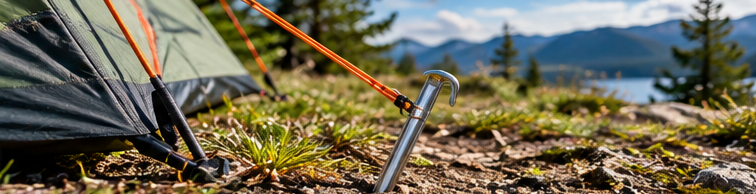
Quick verdict: Choose full-size Groundhog stakes when weight is secondary and you want the larger all-purpose option for suitable soil. Choose Mini-Groundhogs when pack weight matters and the ground suits their smaller profile. Neither is a universal answer for loose sand or every campsite.
Research-based buying guide; no hands-on testing is claimed. As an Amazon Associate, Time to Get Outside earns from qualifying purchases.
| Decision | How the options compare |
|---|---|
| Design | Groundhog: Full-size Y-beam stake Mini-Groundhog: Smaller Y-beam stake |
| Purchase priority | Groundhog: General-purpose anchoring Mini-Groundhog: Reducing carried weight and bulk |
| Soil check | Groundhog: Still depends on depth and ground conditions Mini-Groundhog: Manufacturer describes medium to firm soil |
| Best spending choice | Groundhog: Replace weak critical anchors first Mini-Groundhog: Use where the ground and shelter allow |
Start with the campsite, not the gram count
Tent stakes work as part of a shelter and the ground beneath it. A recognizable brand does not make every stake suitable for soft sand, shallow rocky soil or a platform. Before buying a replacement set, think about where your existing pegs actually struggle.
MSR positions the Groundhog as an all-purpose Y-beam design and the Mini-Groundhog as a smaller, lighter version. The Mini’s description specifically identifies medium to firm soil. This is a useful distinction, but it is not a measured guarantee that either will hold a particular tent in a particular wind.
When the full-size Groundhog is the sensible buy
For car camping, a modest weight reduction often matters less than having appropriate anchors and enough of them. The larger option is a reasonable starting point for ordinary suitable soil when you do not need to minimize every item in a backpack.
Count the shelter’s required attachment points before buying a pack of six. A small retail set may not cover the tent body, vestibules and all the guylines you intend to use. Check the loop and cord arrangement too; the stake must actually work with the shelter’s attachment system.
When the Mini-Groundhog makes sense
The smaller version is worth considering for a carried shelter when the expected ground provides a reliable grip. Saving a little on each stake can reduce the packed kit without buying a completely new tent. The important question is whether that saving preserves appropriate anchoring for your route.
Do not make the entire set smaller simply because the tent is marketed as ultralight. Some positions carry different loads, and conditions change from one site to the next. Follow your shelter maker’s instructions and consider a mixed kit if that suits its setup.
What neither purchase fixes
Loose sand, snow and very shallow ground may need a different anchor design or a different campsite. Hammering harder does not make unsuitable soil suitable, and striking a rock beneath a stake can damage it. Avoid buying another identical set if the real problem is repeatedly using the wrong type for the ground.
Inspect stakes before packing. Bent shafts, damaged heads and worn pull loops are reasons to reassess the kit. A pull cord helps retrieval, but it should not be treated as a guarantee that a buried or jammed stake will come out without care.
A better-value replacement strategy
If the supplied pegs work at most attachment points, replace the troublesome or missing anchors first. This can be a better purchase than replacing every functional peg at once. Keep a few suitable spares for loss or damage rather than carrying an expensive set with no backup.
For Canadian campground trips, account for the actual tent pad. Compacted gravel, hard soil and wooden platforms create different problems. Confirm local rules before improvising attachment points, and never attach to vegetation or campsite structures unless that use is permitted.
Final buying recommendation
Buy the stake for the ground and shelter load, then compare weight. Groundhog is the practical larger option; Mini-Groundhog is the deliberate lighter option for suitable conditions. If neither matches your usual campsite, put the budget toward the correct anchor type instead.
Compare current U.S. and Canadian listings
These buttons open product searches, not guaranteed stock or fixed prices. Match the exact model, size, included accessories and seller before ordering. Canadian shoppers should compare the final cost in Canadian dollars, including any shipping or import charges.
Related buying guides
- Best Tent Stakes for Windy Campsites: Steel, Aluminum or Groundhog?
- Sand Stakes vs Standard Tent Pegs for Beach Camping
- Tent Guylines: Reflective Cord vs Standard Cord
Sources and research notes
Specifications and guidance checked October 15, 2026. Recommendations are editorial judgments based on the cited details and use cases; they are not independent performance measurements.