
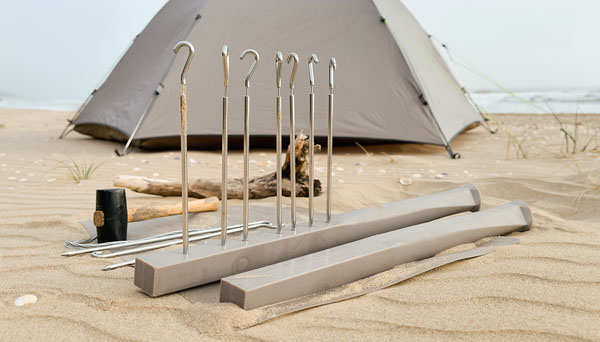
Affiliate disclosure: Time to Get Outside may earn commissions from qualifying Amazon purchases, at no added cost. This guide is research-based, not hands-on testing; image is illustrative.
Quick verdict: Purpose-designed sand anchors hold more reliably in loose sand than short standard pegs; regular stakes remain simpler on firm campsite soil.
The best buy depends on your own trip and the exact compatibility of the gear, not its headline features. Here is how to make the choice without wasting money.
Who should choose the first option?
Broad sand stakes or buried anchors gain holding power from greater surface area, but require adequate burial and careful positioning.
When the alternative makes sense
Basic pegs are light, easy to pack and often sufficient in compact ground, yet tend to pull out of dry loose sand.
What to verify before purchasing
Check campsite permissions, sand depth, line tension, anchor geometry and conditions for gusty weather.
Compare exact product versions, current specifications, durability reports, return rules, and US and Canadian prices. Check manufacturer instructions instead of relying on generic marketplace titles.
Drawbacks and safety
Do not pitch in unsafe tidal zones or dunes where camping is prohibited. High winds can defeat any stake.
Who should skip an upgrade?
Skip an upgrade if your current equipment already solves the problem without undue risk. Buy only when a change improves practical comfort, reliability, or suitability for the trips you actually take.
Final winner
Choose appropriate wide anchors for loose sand and standard pegs for firm approved pitches.
Related outdoor guides
- Rubber vs Carbide Trekking Pole Tips: Which Should You Use?
- Sleeping Bag Compression Sack vs Storage Sack: Do You Need Both?
- Wide-Brim Sun Hat vs Baseball Cap for Hiking
Shop on Amazon USA
See sand tent stakes beach camping on Amazon USASee standard metal tent pegs camping on Amazon USA
Shop on Amazon Canada
See sand tent stakes beach camping on Amazon CanadaSee standard metal tent pegs camping on Amazon Canada