
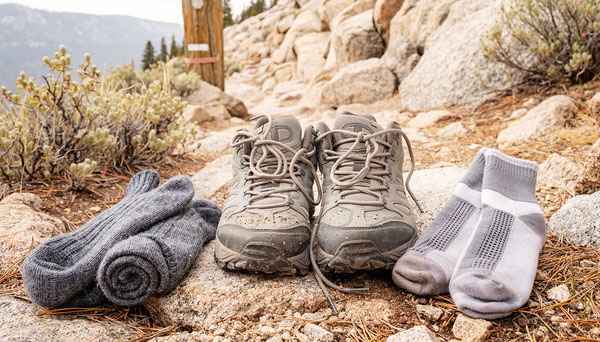
Affiliate disclosure: Time to Get Outside may earn from qualifying Amazon purchases at no added cost to you. This is independently written research-based guidance, not a claim of hands-on product testing. The article photograph is illustrative.
Quick verdict: Merino blends are a comfortable all-round pick for long walks and odor management; synthetic blends can dry quickly and cost less, particularly when footwear already manages moisture well.
A good purchase starts with the trips you really take. Compare the practical benefits and limitations below before paying extra for features that might sit unused.
At a glance: what actually differs?
| Option | Best reason to choose it |
|---|---|
| merino wool hiking socks | Merino is commonly blended with nylon and elastane for durability and shape retention. |
| synthetic moisture wicking hiking socks | Synthetic socks can move moisture and dry quickly, but performance varies with yarn, thickness and shoe ventilation. |
Who should buy the first option?
Merino is commonly blended with nylon and elastane for durability and shape retention. The actual fit and knit cushioning matter as much as the wool percentage.
Buy if: this solves a recurring inconvenience. Skip if: your existing gear already performs safely and comfortably.
Who should buy the alternative?
Synthetic socks can move moisture and dry quickly, but performance varies with yarn, thickness and shoe ventilation. Some walkers prefer thin synthetics for summer heat.
Buy if: its trade-offs suit your activity. Skip if: the extra bulk, cost or upkeep outweighs the benefit.
Four buying checks that matter
Look at heel fit, seam placement, toe-box room, cushion thickness and whether the fabric bunches. Try socks with the exact footwear you will use, ideally late in the day.
Before paying, confirm the latest manufacturer’s specifications, the exact variant in the listing, shipping and return conditions, and whether a repair or replacement part is available if relevant. Compare current Canadian and US listings separately rather than treating currency conversion as the only cost difference.
Limits and safety
No sock prevents blisters if shoes are too tight or rub badly. Change wet socks promptly and inspect hotspots on longer hikes.
Is paying more worth it?
Upgrade for a genuine improvement in safety, day-to-day usability, fit or reliability—not a larger feature list. The lower-priced choice is good value when it does everything you need for your typical outing. Look for consistent independent reviews and manufacturer support before choosing any particular model.
Final winner
Choose a well-fitting merino blend for varied climates, or a lighter synthetic pair for hot conditions and faster washing.
Related Time to Get Outside guides
- Emergency Whistle vs Personal Alarm for Hiking: Which Should You Carry?
- Baseplate Compass vs Handheld GPS for Hiking: Which Is Worth Buying?
- 8×32 vs 10×42 Binoculars for Birdwatching and Day Hikes
Shop on Amazon USA
See merino wool hiking socks on Amazon USASee synthetic moisture wicking hiking socks on Amazon USA
Shop on Amazon Canada
See merino wool hiking socks on Amazon CanadaSee synthetic moisture wicking hiking socks on Amazon Canada