
Affiliate disclosure: This post contains affiliate links. If you buy through one of them, I may earn a commission at no extra cost to you.
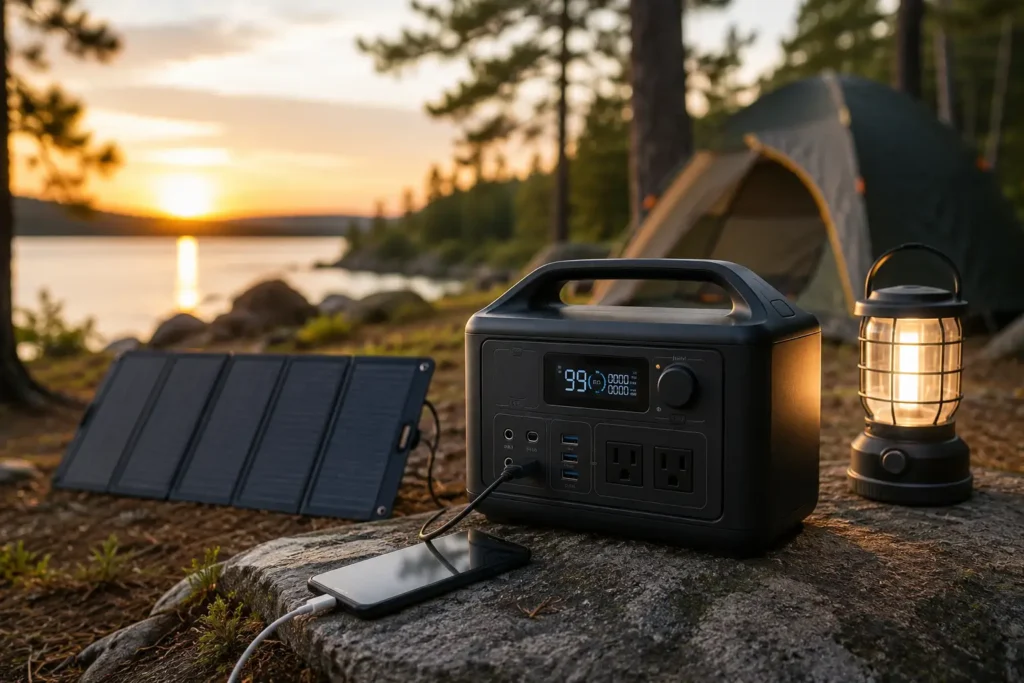
A portable power station is useful for camping, RV trips and home outages because it can quietly run phones, lights, cameras, laptops, small coolers and other compatible gear without fuel or fumes.
Quick verdict
Best all-around size: a mid-capacity LiFePO4 power station gives most campers enough flexibility without becoming too heavy.
Best for light use: choose a smaller unit if you mainly charge phones, lights and cameras.
Best for backup: move up in capacity only if you genuinely plan to run larger appliances or longer outages.
What matters before you buy
- Capacity: estimate the devices you actually plan to run instead of buying the biggest battery available.
- Output: make sure the AC inverter can handle the starting and running wattage of your equipment.
- Battery chemistry: LiFePO4 models are appealing for repeated use because they are designed for many charge cycles.
- Charging speed: faster wall charging is convenient before trips and during short outage windows.
- Solar compatibility: useful for longer off-grid stays, but panels are often sold separately.
- Weight: large batteries get heavy quickly; portability matters if you move camp often.
Good choices on Amazon USA
Check current U.S. pricing and availability for these popular options.
Good choices on Amazon Canada
Canadian readers can check current pricing and availability below.
Final recommendation
For most campers, the sweet spot is a portable LiFePO4 unit that can handle your essential electronics and one or two higher-draw devices without becoming a burden to carry. Buy for your real power needs, not the biggest capacity on the shelf.
Related outdoor gear guides
Also see the best budget gear for spending more time outdoors, why a small daypack is worth carrying, and essential gear for a comfortable day at the beach.